|
Good afternoon. As we head into the weekend, we hope everyone in the path of Helene is safe and you escaped the worst of this beast of a storm. As of this writing, there have been at least 25 storm-related deaths and over 4.6 million customers remain without power in Florida, Georgia, and the Carolinas.
—Lucy Brewster, Neal Freyman, and Mark Reeth
|
|
|
|
|
|
|
|
|
|
|
|
|
|
|
|
| Data is provided by |

|
*Stock data as of market close, cryptocurrency data as of 4:00pm ET.
Here's what these numbers mean.
|
-
Stocks: US stocks wrapped up their third straight winning week, and the Dow notched another all-time high. But if we’re being real, Chinese stocks stole the spotlight in recent days. Thanks to a bazooka of government stimulus, including $114 billion to support the stock market, China’s CSI 300 index posted its best week since November 2008, up 15.7% for the week! And let’s not forget about European stocks, which got a boost from the China optimism and closed at a record.
-
Inflation: The PCE price index, the Fed’s preferred measure of inflation, came in lower than expected at an annual rate of 2.2% in August. That cool inflation number means more rate cuts just got the 🟢.
-
Oil: Overall, crude prices fell for the week but jumped this afternoon after Israel said it hit Hezbollah’s main HQ in an airstrike.
|
|
|
|
Michael M. Santiago/Getty Images
|
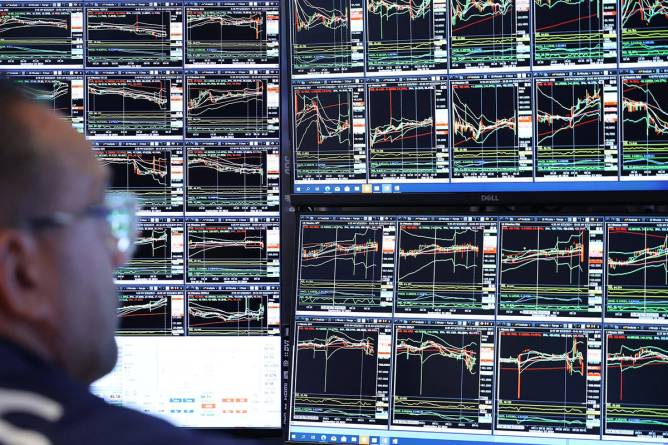
After the Federal Reserve slashed interest rates and gave the stock market a shot of espresso last week, you may be expecting calm weather until the next big market-shaking event: November’s presidential election.
But don’t get too comfortable, because you probably won’t have to wait for the votes to be counted to feel another market quake.
That’s according to Bank of America analysts, who selected a few key dates leading up to the election they project to be especially volatile based on option price forecasts.
Mark your calendar for:
October 4 (next Friday) and November 1: Nonfarm payroll reports (aka the monthly jobs reports) for September and October will be released on these two dates, respectively. Investors will be watching closely to see if the labor market has dug itself out of a slump. Analysts estimate a 1% move in the S&P 500 in either direction these days, based on options prices.
October 10: Inflation data doesn’t hit quite as hard as it used to. But that doesn’t mean September’s CPI numbers will have no impact. Options pricing indicates a move of a little less than 1% in either direction for the S&P 500.
October 21: Tech behemoths will be announcing their Q3 earnings this week, which will likely jolt markets given their outsized influence on the major indexes and how high the bar has been raised for companies investing billions into AI. Option prices forecast a 1% move in either direction for the S&P 500.
November 6, obviously: The day after the election, analysts calculate a 2.5% move in the S&P 500—the biggest swing by far of any date in the lead-up to Election Day.
If you’re surprised that macroeconomic data points can pack the same market-moving punch as something like Big Tech earnings, that’s because investors tuning into every economic data point is a relatively new phenomenon.
According to a new survey from Bespoke Investment Group, the S&P 500’s daily moves after the release of economic data increased from 0.81% before the pandemic to 0.94% after 2020, and even relatively niche macro reports that used to fade into oblivion (like ADP private payrolls) have now become critical trading moments for investors. Good for you nerds, I guess. —LB
|
|
Wishful thinking? Well, the world’s seen rapid advancements in drone technology, autonomous navigation, AI—you name it. Who’s to say teleportation isn’t next?
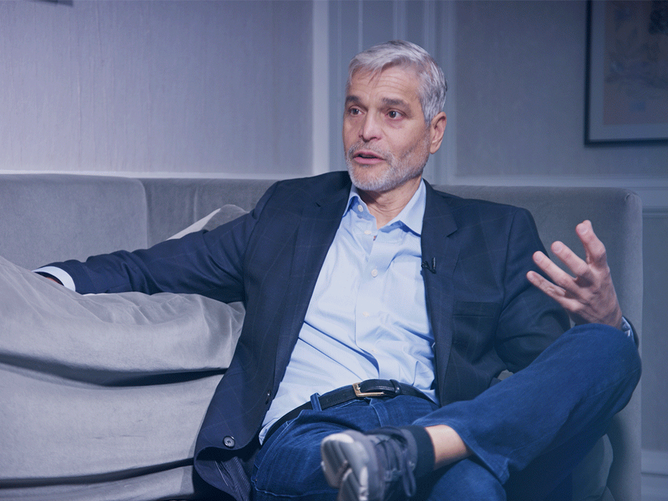
Take it from Ravi Mhatre, partner and co-founder of Lightspeed Ventures. As an early investor in AI, Mhatre has all kinds of compelling ideas about technology, innovation, and—yep—even teleportation.
On the launch of ChatGPT, for example, Mhatre says, “It was a mind-stretching moment where, once people understood it, the imagination about what could happen next was profound.”
Want more deets? Tune into the latest episode of NYSE’s show Interesting Times. You’ll hear from Mhatre and other leaders building and financing innovation that’s intended to take the world into the future.
Check it out. |
|
🟢 What’s up
-
Bristol-Myers Squibb rose 1.56% after the FDA approved its new drug for schizophrenia, the first new treatment of its kind in decades. Some analysts expect the drug, Cobenfy, to bring in $6 billion in peak annual revenue.
-
Trump Media gained 5.58% despite a co-founder of its Truth Social platform cashing out nearly all of his shares—worth about $100 million at current prices.
-
Chinese EV maker Nio added another 12.80% to bring its weekly gains to nearly 25%. It’s benefiting from the overall euphoria around Chinese stocks and anticipation over its quarterly delivery numbers due next week.
-
Speaking of the Chinese government’s stimulus measures, investors are wagering that the Macau locations of Las Vegas Sands Corp. (up 5.59%) and Wynn Resorts (up 7.24%) will see more visitors.
-
IonQ, a quantum computing company based in College Park, MD (go Terps), shot up 20.47% after inking a contract with the US Air Force Research Lab.
 What’s down What’s down
-
Nvidia dropped 2.17%. Bloomberg reported that the Chinese government is ramping up the pressure on local tech companies to move away from using Nvidia AI chips and lean more on domestic suppliers.
-
WeightWatchers, whose shares are down more than 90% this year, booted its CEO Sima Sistani, who pivoted the company to weight-loss drugs. Investors aren’t betting a change at the top will lead to a turnaround, sending shares 2.11% lower on the day.
-
Globe Life sank 4.74% after the US Equal Employment Opportunity Commission found that the life insurance company tolerated a “pervasive pattern of harassing conduct” at one of its top sales agencies, per Business Insider.
|
|
Francis Scialabba
|
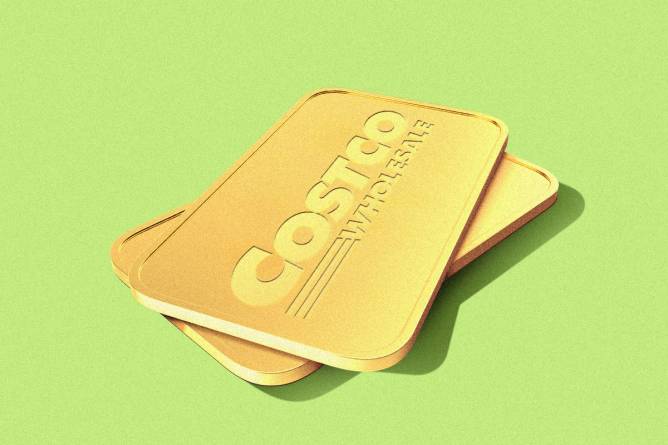
Costco did not sell 1,000 bottles of baby oil to Diddy, but it did sell more gold bars than ever.
During the company’s Thursday earnings call, CFO Gary Millerchip said that sales of Costco’s gold bars had jumped “double digits” in the last quarter—and Costco was already slinging an estimated $100 million–$200 million worth of gold each month since their debut last year. The shiny product has surprisingly become a “meaningful tailwind” for e-commerce sales, Millerchip said.
The popularity of Costco’s gold bars has paralleled rising prices of the metal, which rose to a fresh record of $2,708.70 an ounce on Thursday. It’s now up 30% this year, Yahoo Finance reported.
The question everyone wants to know: Is Costco considering making Kirkland Signature-branded gold?
Costco CEO Ron Vachris said, “No plans at this time.”
|
|
What does the future hold? Ravi Mhatre’s firm, Lightspeed Ventures, has been investing in AI for more than a decade, and he’s got plenty of ideas about what he thinks is coming next. You can hear his thoughts on the future of AI and innovation in the latest ep of Interesting Times. Tune in. |
|
Francis Scialabba
|
If you’re certain you’d be a billionaire if only you had a time machine, think again.
A new study from Elm Partners Management’s Victor Haghani and James White found that for the average investor, seeing the future didn’t actually help their returns.
The researchers conducted the “Crystal Ball Challenge” by organizing a stock market trading simulation and separated participants into three groups by investing expertise. Instead of simulating trading in the present day, the study organizers selected 15 days in the past, between 2008 and 2022.
They gave the players a sneak peek into Fed policy and economic news by showing them the front page of the next day’s Wall Street Journal, but blocked out the precise market moves so the participants couldn’t know exactly how the market reacted to the news.
A humbling experiment
The results were surprising: Even the Wall Street pros included in the study only made the right bets 63% of the time, and that’s with the prior knowledge of how macroeconomic data and Fed policy was going to land.
The players with years of trading experience returned 130%, but the graduate students (mostly majoring in business) playing only broke even, while study volunteers with no investing experience lost 10%.
This study highlights the difficulty in predicting what information the stock market has priced in already. It’s a tale as old as time: Even for the most seasoned investors among us, picking stocks is just plain hard.
Our question: How would the study turn out differently if the researchers used Brew Markets market insights instead of the Wall Street Journal? You’re on, Dow Jones.—LB
|
|
-
Mark Zuckerberg will be deposed in an author-led lawsuit accusing Meta of infringing on their copyrights to train its AI models.
-
Intel rejected an offer by Arm to buy its product division, Bloomberg reported. The vultures are swarming around the struggling chipmaker.
-
US consumer sentiment rose to a five-month high in late September. The Fed’s rate cuts probably had something to do with it.
-
The Biden administration’s proposed ban on Chinese tech in cars on American roads could cut US auto sales by nearly 26,000 vehicles per year and raise prices, the Commerce Department said.
-
Meet the man poised to become Japan’s next prime minister: Shigeru Ishiba. His hobbies include trains, building models, and ramen. The yen jumped sharply on the news.
|
|
|
It’s jobs, jobs, and more jobs next week. On Tuesday, we’ve got the Job Openings and Labor Turnover Survey, Wednesday brings us the ADP employment report, Thursday is the usual initial jobless claims data, and Friday is the big one: the US employment report.
This deluge of data will play a key role in determining the Fed’s next move. While the central bank seems content to declare victory against inflation, the labor market is a key question mark hanging over the economy. Stronger than expected reports next week may inspire Jerome Powell and friends to keep the next rate cut small, while too much cooling in the labor market may mean a bigger cut than investors expect.
As for earnings, here’s the lineup:
Monday: Carnival
Tuesday: Paychex, McCormick & Co., Nike
Wednesday: Conagra Brands, Levi Strauss
Thursday: Constellation Brands
Friday: British American Tobacco
|
|
Charly Triballeau/Getty Images
|
We’re a few weeks into the Brew Markets Fantasy Investing League, and things are heating up. The top of the leaderboard was claimed early by Caleb A., whose only investment, Instil Bio Inc., has been enough to send his returns soaring (up $71,498.24).
Following closely behind are Dan C., Andrija J., and Heaven W., who’ve been jockeying for position throughout the last few days.
A pattern is beginning to emerge among the leaderboard: The best performers either made a single savvy investment they poured all of their money into, or they are constantly playing the market’s momentum day by day. To illustrate, five of the top 10 investors have only invested in a single stock, while fifth-place investor Aaron R. has made a whopping 53 investments.
Smaller biopharma and cannabis stocks have given the top investors a lot of bang for their buck, as has a well-timed investment in Intel ahead of its recent recovery. Energy stocks have also been a fan favorite, an understandable play given the current volatility in that market, including nuclear stock Oklo.
And Microstrategy, which, considering its massive bitcoin holdings is a stock market proxy for the cryptocurrency, has appeared in several of the leader’s portfolios, as has Coinbase.
It’s still early innings in our inaugural investment league—only time will tell if a single booming stock will be enough to propel a winner all the way through December 31.—MR
|
|
ADVERTISE
//
CAREERS
//
SHOP
//
FAQ
Update your email preferences or unsubscribe
.
View our privacy policy
.
Copyright ©
2024
Morning Brew. All rights reserved.
22 W 19th St, 4th Floor, New York, NY 10011
|
|