| | | | | | | | Data is provided by |  |
*Stock data as of market close, cryptocurrency data as of 4:00pm ET. Here's what these numbers mean. | - Stocks slid lower throughout the day thanks to some rough economic readings (more on that below), but mostly managed to recover in the final moments of the trading session to cap off a wild month of investing.
- Crude posted its largest monthly percentage drop since 2021 thanks to fears of slowing demand coupled with signals from Saudi Arabia that the major oil producer is fine with lower prices.
| |
|
|---|
GDP The meltdown over President Trump’s tariff back-and-forth isn’t just relegated to the stock market anymore. Now, macro data proves what beauticians and nightclubbers already knew: The US economy really is contracting. Today, the Commerce Department reported that gross domestic product (GDP) dropped 0.3% in the first quarter of 2025, far below the 0.4% increase economists projected. That’s a steep decline from Q4’s 2.4% growth, and marks the first time GDP has turned negative since all the way back in 2022. As big box retailers warned us, shoppers aren’t feeling spendy but were still willing to open their wallets before tariffs hit. Consumer spending, which accounts for roughly 70% of the economy, rose 1.8% in Q1—its slowest increase since mid-2023, but far from a catastrophic downturn. Companies were also in a hurry to get ahead of tariffs: Imports jumped 41.3% for the quarter, while exports rose only 1.8%. That trade imbalance, combined with a cut in federal spending from Musk’s DOGE efforts, weighed on GDP, according to the Commerce Department. But if this is how the numbers look now, just wait until the full range of tariffs really hits. “We are not overly concerned about the negative GDP print. After all, the economy expanded 2.5% in 2022 as a whole despite the decline in 1Q22. What is more concerning is the potential impact of tariffs, which is likely to cause a more substantial economic slowdown in the second half of 2025,” explained Senior US Economist at UBS Brian Rose in a note today. So how did the White House address news of an economic slowdown? “This will take a while has NOTHING TO DO WITH TARIFFS, only that he [former President Biden] left us what bad numbers,” Trump posted on Truth Social. Meanwhile, top trade advisor Peter Navarro called the GDP contraction, “The best negative print I have ever seen in my life.” Inflation is sizzling…sort of Today’s GDP report also noted that the PCE price index accelerated by 3.6% in the quarter, up from 2.4% in Q4. Core PCE, which excludes volatile food and energy prices, rose 3.5% in Q1, up from 2.6% last quarter. But that wasn’t the only inflation reading investors had to handle today. The March PCE price index reading revealed inflation rose 2.3% year over year, slightly higher than the 2.1% economists expected. But the month over month number—and monthly core PCE—remained flat. That was below the 0.4% monthly increase in February. PCE was a bright spot today among a sea of negative economic data points. On any other day, that reading would be interpreted as great news—after all, the numbers show inflation slowing nearly to the Fed’s stated 2% goal. But with consumers increasingly anxious about the economy and businesses raising giant question marks during earnings calls, everyone is too busy waiting for the tariff tidal wave to celebrate.—LB | | |
|
|
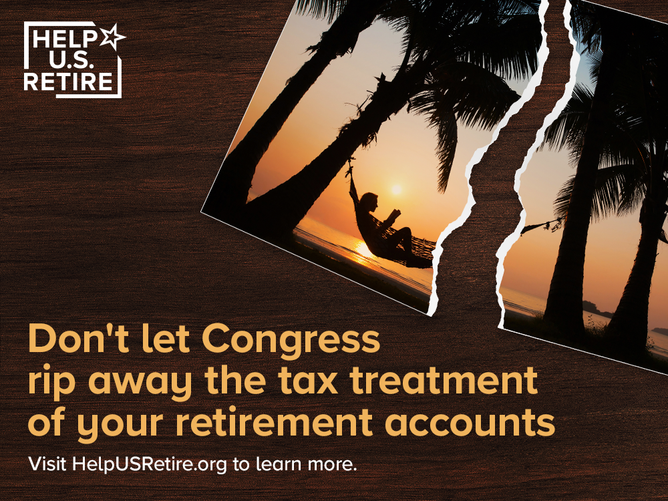
Presented by Investment Company Institute We know you’ve got big plans for retirement (yes, hangin’ out and doing nothing counts as a plan). But your retirement savings account could face a potential change—one that might put your hard-earned pennies at risk. Major provisions of US tax policy will expire by the end of 2025, which could impact your IRA, 401(k), and 403(b). Need help decoding these potential changes? That’s where the Investment Company Institute comes in. They’re here to help you understand what these changes to tax provisions could mean for your future with the Help U.S. Retire campaign. Check out the campaign to learn more about what Congress is cookin’ up for your retirement savings + how you can protect your well-deserved dollars. |
|
STOCKS 🟢 What’s up  What’s down What’s down
- Super Micro Computer plunged 11.50% after reporting terrible preliminary earnings and warned of weaker results still to come.
- Nvidia was pulled down just 0.09% by its very first “sell” rating from Wall Street analysts.
- Etsy beat revenue expectations last quarter, but fell 5.74% after missing profit forecasts as the number of buyers and sellers using its platform continued to fall.
- Snap tumbled 12.43% after the social media stock warned that economic uncertainty could hurt its advertising business and refused to issue a fiscal forecast.
- Chili’s parent company Brinker International fell 1.89% despite posting solid earnings as investors worry about slowing consumer spending.
- Norwegian Cruise Line sank 7.77% after missing earnings and warning of a slowdown in demand.
|
|
|
DATA OF THE DAY Lost in the deluge of data today was one tidbit that likely caught Jerome Powell’s eye: The ADP national employment report. This bad boy breaks down the US private sector labor market, and the numbers weren’t pretty. Private employers added a measly 62,000 jobs in April—well below analyst expectations of 125,000, and an enormous drop from the 147,000 added in March. “Unease is the word of the day. Employers are trying to reconcile policy and consumer uncertainty with a run of mostly positive economic data,” wrote ADP Chief Economist Dr. Nela Richardson in the report. “It can be difficult to make hiring decisions in such an environment.” The Fed’s mandate is to keep prices stable while maximizing employment. Prices are reasonably stable, as today’s PCE data shows, though inflation continues to be a threat. As for employment, the labor market is not yet in critical condition but warning signs are beginning to rear their heads. Today’s ADP report was one, and yesterday’s JOLTS report—which saw the number of job openings fall to their lowest level since last September—was another. Powell is almost certainly watching Friday’s US jobs report like a hawk. You should be, too. |
|
|
QUARTERLY REPORTS  Visa rose 1.17% after the credit giant’s fiscal second-quarter results surpassed expectations, thanks to an 8% increase in payments volume and a 9% surge in processed transactions. Although consumer sentiment is down in the dumps—currently at its fourth-lowest level dating back to 1952—Americans still seem willing and able to wallow in some retail therapy and spend up a storm. As Visa CEO Ryan McInerney pointed out, "Consumer spending remained resilient, even with macroeconomic uncertainty." Visa rose 1.17% after the credit giant’s fiscal second-quarter results surpassed expectations, thanks to an 8% increase in payments volume and a 9% surge in processed transactions. Although consumer sentiment is down in the dumps—currently at its fourth-lowest level dating back to 1952—Americans still seem willing and able to wallow in some retail therapy and spend up a storm. As Visa CEO Ryan McInerney pointed out, "Consumer spending remained resilient, even with macroeconomic uncertainty."
- EPS: $2.76, beating the anticipated $2.68
- Revenue: $9.59 billion, a slight edge over forecasts of $9.55 billion
 Starbucks sank 5.66% in the wake of a dismal Q2 earnings report, which does not bode well for CEO Brian Niccol, who was brought on board late last summer to turn this sputtering coffee chain around. Despite his efforts (which included paring down the menu by 13 drinks and reducing wait times to under four minutes), sales at stores open more than a year fell for the fifth straight quarter as coffee drinkers peeled off toward cheaper cups of joe at Dunkin’ and McDonald’s. Starbucks sank 5.66% in the wake of a dismal Q2 earnings report, which does not bode well for CEO Brian Niccol, who was brought on board late last summer to turn this sputtering coffee chain around. Despite his efforts (which included paring down the menu by 13 drinks and reducing wait times to under four minutes), sales at stores open more than a year fell for the fifth straight quarter as coffee drinkers peeled off toward cheaper cups of joe at Dunkin’ and McDonald’s.
- EPS: $0.41, far below the anticipated $0.50
- Revenue: $8.76 billion, falling short of the expected $8.85 billion
 First Solar plunged 8.32% after the largest publicly traded manufacturer of solar modules in the US released lackluster first-quarter financial results and slashed its sales and profit outlook for 2025. Although Wall Street analysts regarded this company as well protected against tariffs since it has some factories stateside, CEO Mark Widmar admits that its plants in India, Malaysia, and Vietnam face “significant economic headwinds,” and that some may have to cut back or pause production until they see brighter days ahead.—JD First Solar plunged 8.32% after the largest publicly traded manufacturer of solar modules in the US released lackluster first-quarter financial results and slashed its sales and profit outlook for 2025. Although Wall Street analysts regarded this company as well protected against tariffs since it has some factories stateside, CEO Mark Widmar admits that its plants in India, Malaysia, and Vietnam face “significant economic headwinds,” and that some may have to cut back or pause production until they see brighter days ahead.—JD
- EPS: $1.95, way below the expected $2.50
- Revenue: $844.57 million, a tad higher than the anticipated $839.27 million
|
|
|
Together With Investment Company Institute You might have to rethink your retirement plans. That’s because provisions of US tax policy expire at the end of this year—provisions that offer tax advantages for your retirement accounts. Want a good breakdown? Get the details with the Help U.S. Retire campaign from the Investment Company Institute. |
|
NEWS - The US and Ukraine are reportedly in the final stages of negotiating a mineral rights deal that has at times turned contentious.
- Speaking of deals, the White House is confident that a trade deal with India is imminent.
- Consumer spending soared last month as Americans bought big ticket items ahead of tariffs.
- Elon Musk bid President Trump farewell as he begins to pull back from DOGE and refocus on Tesla.
- #recessionindicator: Some people are reselling tickets to Beyonce’s Cowboy Carter tour for under $60.
- But seriously, are we in a recession?
|
|
|
CALENDAR After a wild day of economic data, things calm down a bit tomorrow. We’ll continue the labor market extravaganza with the weekly look at initial jobless claims, and round things out with the ISM manufacturing index. On the earnings front, the heaviest hitters by far are Apple and Amazon. But there’s plenty more where that came from: Eli Lilly, Mastercard, Amgen, MicroStrategy, CVS Health, Airbnb, Dominion Energy, Roblox, Block, Hershey, Live Nation Entertainment, Kellanova, Estee Lauder, Duolingo, Twilio, Juniper Networks, Moderna, United States Steel, Roku, Wayfair, and Harley-Davidson all report as well.  Before the open Before the open
- McDonald’s probably isn’t the first company you think of when pondering the effects of tariffs, but the fast food king’s broad international footprint means that the additional costs of levies could hit the bottom line harder than expected. A strong balance sheet and impressive free cash flow means McDonald’s is well-positioned to weather the storm, but tariff mayhem is hitting at the exact same time that sales have been slowing, and shareholders are sure to have questions about what the future holds. Consensus: $2.68 EPS, $6.13 billion in revenue.
 After the close After the close
- Reddit has tumbled about 30% in 2025, but that may actually be a good thing—shares soared over the last 12 months, and the recent pullback makes the stock a bit more undervalued. The company posted impressive 71% revenue growth last quarter, and even if marketing budgets get slashed due to economic worries, new AI initiatives can help offset the slowdown. Throw in strong user growth, and Reddit might be a tariff-proof stock at a reasonable price. Consensus: $0.02 EPS, $370.54 million in revenue.
|
|
|
|
ADVERTISE // CAREERS // SHOP // FAQ
Update your email preferences or unsubscribe .
View our privacy policy .
Copyright © 2025 Morning Brew Inc. All rights reserved.
22 W 19th St, 4th Floor, New York, NY 10011 |
|














 More of a visual learner? Here are 9 charts detailing how markets performed during President Trump’s
  One stock has quietly crushed the market during Trump’s first 100 days:
  Four money moves financial experts say you should make right after you
  An interview with five of JPMorgan’s newest managing directors on their work habits, personal lives, and