The vibes are weird on Wall Street
To:Brew Readers
Brew Markets // Morning Brew // Update
Plus, global stocks are crushing US investments.

Good afternoon. Weight-loss drugs are an undeniable hit, but we’re only just beginning to understand their knock-on effects. Lower spending on junk food could take a toll on the bottom lines of consumer goods companies. Fewer obese passengers could save airlines millions in fuel.

But one group has already begun to see the benefits of weight-loss drugs: cosmetic surgeons.

Excessive weight loss leaves patients with sagging skin, and according to the Wall Street Journal, demand for plastic surgery to trim those folds has soared. Fees for these procedures can run anywhere from $20,000 to $50,000, which means plastic surgeons can now enjoy the sort of wealth usually reserved for, well, weight-loss drug company CEOs.

—Mark Reeth & Lucy Brewster

MARKETS

  • The S&P 500 kicked off the short trading week inches from a record high, only to tumble lower throughout the day as stocks struggled to pick a direction.
  • Oil climbed thanks to a Ukrainian drone strike on a Russian pipeline to Kazakhstan responsible for approximately 1% of the global oil supply.
  • Bitcoin continued to struggle as the promise of a strategic reserve remains unfulfilled.

VIBES

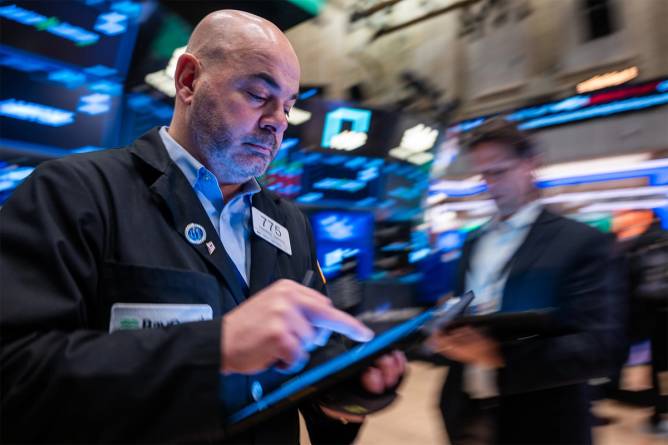
Stock trader on NYSE floor

Spencer Platt/Getty Images

How bullish should you really be right now?

The S&P 500 is up 23% over the past 12 months, the chances of rate cuts are shrinking by the minute, and the geopolitical landscape has question marks all over it.

Retail investors and professional money managers are looking at the same facts—but coming to starkly different conclusions.

According to the latest survey from the American Association of Individual Investors, 47% of the investors surveyed expect stock prices to fall over the next six months—the highest reading since November 2023. Investors pointed to uncertainty about domestic policy such as tariffs and overvalued tech stocks as some of the reasons for their bearishness.

But while the retail crowd is pessimistic, institutional players—which include professional money managers like hedge funds—are all-in. In fact, the so-called “smart money” is more bullish on stocks than it has been in over a decade.

According to Bank of America’s latest global fund manager survey, the pros reported that their cash levels were at their lowest since 2010. To them, things look rosy for the global market: Recession fears among the group surveyed are at a 3-year low, and over half of the fund managers expect a soft landing.

While the “Mag 7” stocks are still the most popular trade among the professional investors, they’re now foreseeing global equities to be the best performing trade of 2025 (more on that later in this newsletter).

He’s called the oracle for a reason

So, who’s right? Nobody has a crystal ball, and the consensus among the biggest Wall Street names is that there are still plenty of reasons to believe that stocks will keep rallying even through a topsy-turvy policy environment.

But one voice that has earned some credibility for being contrarian is none other than Warren Buffett himself. The Oracle of Omaha is feeling more fearful than greedy, and holding on tight to his cash. According to a recent regulatory filing, Berkshire Hathaway sold about $6 billion worth of stocks last quarter, adding to the conglomerate’s $310 billion pile of cash.

With valuations still historically high, there’s good reason to wonder how much higher stocks can climb. But the market is often all too happy to defy bearish logic: as John Maynard Keynes once said, “The markets can remain irrational longer than you can remain solvent.”—LB

Sponsored by Betterment

STOCKS

The biggest winners and losers on the stock market today

🟢 What’s up

  • Intel popped 16.06% on a Wall Street Journal report that Broadcom and TSMC are considering splitting the American tech icon in two.
  • Several stocks got the patented Buffett Bump after the Oracle of Omaha increased his stake in Constellation Brands (up 3.87%), and Domino’s Pizza (up 0.18%).
  • Chinese stocks got their own bump after President Xi Jinping met with CEOs and promised them support. Alibaba rose 1.74%, Tencent climbed 4.47%, and Xiaomi rose 8.78%.
  • Super Micro Computer popped another 16.47% following its business update last week.
  • Walgreens Boots Alliance surged 14.02% on reports that its deal to sell itself to private equity firm Sycamore Partners may still be alive.

What’s down

  • All good things must come to an end: Meta Platforms has been on a 20-day winning streak, but that finally wrapped up after the social media giant dropped 2.76%.
  • Medtronic sank 7.26% after the medical device maker missed sales estimates last quarter.
  • Fluor fell 8.45% after the engineering company fell short of analysts’ forecasts last quarter and its guidance for the coming quarter came in weaker than expected.
  • Conagra Brands lowered its full-year earnings guidance from $2.45 per share to $2.35. Investors didn’t like that one bit, and shares tumbled 5.46%.

STAT OF THE DAY

Succession Cha-ching

Succession/HBO via Giphy

Forget gold, crypto, or any of those other crazes: The hottest investment of 2025 is the humble ETF.

Exchange-traded funds allow investors to own a basket of stocks without the hassle of picking them individually, and their popularity has soared since their debut back in 1993. These days the ETF industry is cutthroat, with massive asset managers like Vanguard and State Street competing for every last penny—to the point that Vanguard just slashed fees on hundreds of funds to entice as many investors to pour money into ETFs as it could.

The plan seems to have worked: Investors dumped $90.25 billion into ETFs in the US during January alone, a record amount according to ETF research firm ETFGI. That brings the total amount of assets under management across the US ETF industry to $10.73 trillion, also a new record.

That’s great news for Vanguard in particular: Its VOO fund, which tracks the S&P 500, just overtook State Street’s SPY as the world’s largest ETF with $632 billion in assets.

INTERNATIONAL

American flag with stock arrows instead of stars

Francis Scialabba

We get it—there’s enough chaos unfolding in the US right now to hold your attention for a lifetime.

But savvy investors are tuning out the noise and looking abroad.

President Trump gave the market a bump when he was elected, but global stocks are outperforming American companies in 2025—and strategists say international equities still have further to run.

The iShares MSCI All Country World Index ex-US ETF (has a certain ring to it, doesn’t it?) is up 8.22% this year, outpacing the S&P 500’s gain of 4.45% over the same period.

Europe is responsible for a lot of the international market’s bull run. The Euro Stoxx 600 reached an all-time high yesterday, and is up 9.11% this year so far.

But things are going well on the other side of the globe as well. “Chinese tech shares have rallied over 25% since mid-January amid a positive re-rating as the emergence of DeepSeek rekindled investor optimism over AI innovation in China,” wrote UBS Global Wealth Management Chief Investment Officer Mark Haefele in a note today.

The tables have turned

This dynamic might come as a surprise, given that global stocks have been trailing the US market for the better part of a decade.

While the AI trade is still alive and well in the US, it’s clear that much of the juice has been squeezed out of the Big Tech companies that have grown to dominate the broader market (we’re looking at you, Nvidia). In fact, 89% of money managers said in a recent Bank of America survey that they think US equities are currently overvalued.

Some international central banks are lowering rates at a faster pace than the US, which could be a boost to global economies. The European Central Bank cut rates last month, Australia’s central bank cut interest rates for the first time in four years just today, and China has been pursuing an aggressive stimulus plan to revive its beleaguered economy.

But there are certainly risks to global stocks, too. Trump’s tariffs could hit international companies hard across an array of sectors, and the uncertainty regarding the Ukraine peace deal could pose a challenge to the European economy.

Then again, a peace deal could boost the European economy if implemented, and tariffs could end up handicapping American businesses and make some international trades seem more attractive.

The bottom line: “While we expect volatility to pick up in the near term amid a range of macro uncertainties, favorable fundamentals should continue to support global equities’ next leg up,” explained Haefele.—LB

Together with Betterment

NEWS

What's going on in financial markets today

  • Homebuilder confidence hit its lowest level in five months thanks to high housing costs and fears of tariffs.
  • More presidential memecoin madness: Argentinian President Javier Milei touted a new crypto called libra, only to watch it plunge 95% hours later as insiders sold out.
  • Elon Musk’s xAI has released Grok 3, its latest AI model.
  • Forbes 30 Under 30 strikes again: Frank founder Charlie Javice goes to court against JPMorgan today.
  • Amazon forced its workers back into the office. It didn’t go well.
  • Nike has had a terrible couple of years. Only Kim Kardashian can save the company now.

CALENDAR

What is happening in the world of finance tomorrow

The wave of real estate reports continues on Tuesday with housing starts and building permits. This report is exactly what it sounds like: a report from the Census Bureau on how many privately owned homes started to be built last month, and how many received permits to be built in the coming months. Both figures have begun to climb recently, though housing completions remain slow, meaning relief for would-be homebuyers has yet to materialize.

On the earnings front, we’ve got companies like Carvana, Analog Devices, Fiverr International, Imax, NerdWallet, Manchester United, and The Cheesecake Factory dropping numbers. Here are two other names that may be familiar to many:

Before the open

Etsy has thus far avoided being squeezed out by bigger competitors, but the favorite platform of indie artisans has an even greater enemy: itself. The site’s immense debt load is coming due, and at the same time its revenue growth is dwindling. The combination isn’t one that inspires a lot of faith, and while management has touted new initiatives to keep buyers coming back, Wall Street has taken a wait-and-see approach: nine of the 14 analysts covering the company rate it a “hold.” Consensus: $0.95 EPS, $861.69 million in revenue.

Wingstop doesn’t suffer from a lack of demand. On the contrary, its expansion over the last few years has been impressive, with new franchisee locations pouring money back into the company’s coffers. The problem is supply: With chickens on the cutting block as a bout of avian flu sweeps through the US, wing prices could climb. Wingstop’s costs of goods sold have risen year-over-year for the last three straight quarters, and shareholders will want to hear a plan from management about whether the company will continue to eat price increases, or pass them on to customers. Consensus: $0.90 EPS, $165.05 million in revenue.

SHARE THE BREW

Share Brew Markets with your friends, acquire free Brew swag, and then acquire more friends as a result of your fresh Brew swag.

We’re saying we’ll give you free stuff and more friends if you share a link. One link.

Your referral count: 2

Click to Share

Or copy & paste your referral link to others:
morningbrew.com/brew-markets/r/?kid=9ec4d467

   
ADVERTISE // CAREERS // SHOP // FAQ

Update your email preferences or unsubscribe here.
View our privacy policy here.

Copyright © 2025 Morning Brew Inc. All rights reserved.
22 W 19th St, 4th Floor, New York, NY 10011

Making sense of market moves

Stay up to date on the latest market news with daily analysis of the investing landscape, served up Brew-style.

By subscribing, you accept our Terms & Privacy Policy.

A mobile phone scrolling a newsletter issue of Brew Markets