|
|
|
|
|
|
|
|
|
|
|
|
|
|
| Data is provided by |

|
*Stock data as of market close, cryptocurrency data as of 4:00pm ET.
Here's what these numbers mean.
|
-
“A little disturbance” is how President Trump described the effects of tariffs. Markets seemed to disagree: After a wild ride yesterday, stocks spent most of today trying to pick a direction, hoping to hear any news of a pullback on tariffs.
-
Investors got their wish in the afternoon, when Trump gave US automakers a one-month exemption to tariffs. The entire market soared on the hopes that more concessions may be on their way—though judging by Trump’s description of his call with Canadian Prime Minister Justin Trudeau, there’s still a long way to go.
- Bitcoin broke back above $90,000 for the first time in a week as investors took on more risk, while oil sank even lower as relief for energy imports from Canada failed to materialize.
|
|
|
|
|
ADVICE
|
Tariffs in, tariffs out, geopolitics this, Trump that: When every headline about the economy is “who knows, anything could happen,” it’s probably time to rethink your investment strategy.
The pros are in agreement: Relying on AI growth stocks to carry your portfolio is so last year, and guarding against volatility is now the name of the game. Which means it’s time for defensive—not to be confused with defense—investments.
Sectors like healthcare, consumer staples, and utilities—which are considered defensive because they provide goods and services that are always necessary, no matter what happens to the economy—are already the best-performing of the year so far.
“Defensive sectors rallied amid volatility (Staples +5.6%, Health Care +1.4%, Utilities +1.2%), while Real Estate also rallied on lower rates (+4.1%),” explained Bank of America strategists in a recent note. Meanwhile, growth is out: “On the other hand, the top three growth sectors from last year all fell in February: Consumer Discretionary (-9.4%), Communication Services (-6.3%) and Tech (-1.4%) and are the worst performers YTD.”
These were also some of the same sectors that performed well during the 2018 trade war, the Bank of America analysts noted.
In defense of defensive picks
When growth stocks are dominating the market, of course everyone wants to ride the wave up. But when major banks are checking off more and more recession risks by the day, savvy investors search the corners of the market that are less reliant on the day-to-day ups and downs.
That’s why low beta—or less volatile—investments are in vogue at the moment. “Risk was in focus: The lowest beta quintile small caps outperformed the highest beta quintile by 11 percentage points. Utilities and Real Estate outperformed within both small and mid (and were the only sectors with positive returns in small caps), while Tech underperformed most [for the third consecutive month],” wrote BofA analysts.
Evercore analyst Julian Emanuel also picked out a slew of names in the Russell 3000 index that are low volatility. Some of the names include Apple, Abbvie, GoDaddy, CVS, Cigna, HP, among others.
Another way to play the moment is to look for defensive ETFs. Just yesterday, Goldman Sachs unveiled a timely set of three funds specifically designed to hedge against volatility. The so-called buffer funds operate by using derivatives to give investors some downside protection—which may be exactly what they need right about now.—LB
|
|
|
|
|
|
presented by Cytonics
|
Attention docs, scientists, and cool news enthusiasts: A potential breakthrough has arrived, hot off the press.
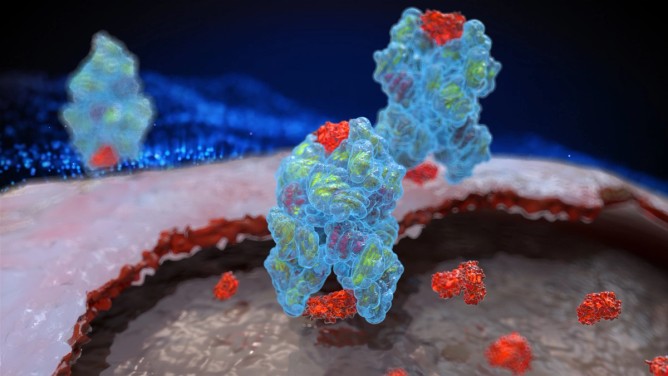
Cytonics’ CYT-108 is a protein therapy that neutralizes the enzymes that chew through cartilage in arthritic joints. If approved by the FDA, it could be a first-of-its-kind biologic that actually addresses the root molecular cause of osteoarthritis instead of merely treating the symptoms.
Yep, that  is for real. Cytonics has raised over $25m from private equity and crowdfunding investors to fund drug development, manufacturing, and the first-in-human Phase 1 clinical study of CYT-108 as a treatment for osteoarthritis of the knee. is for real. Cytonics has raised over $25m from private equity and crowdfunding investors to fund drug development, manufacturing, and the first-in-human Phase 1 clinical study of CYT-108 as a treatment for osteoarthritis of the knee.
Phase 1 results will officially be in later this year, and if you’d like to invest ahead of this potentially major milestone, learn more + check out the investment opportunity on StartEngine.
|
|
|
STOCKS
🟢 What’s up
-
US automakers surged on the news that President Trump is giving them a one-month reprieve from tariffs. General Motors rose 7.22%, Ford climbed 5.75%, and Stellantis gained 9.19%.
-
Huntington Ingalls Industries soared 12.37% after Trump gave the shipbuilding industry a shoutout in his speech last night.
-
Secretive defense contractor Palantir popped 6.79% thanks to analysts at William Blair upgrading it due to its recent selloff and suddenly cheap price tag.
-
Moderna got a vote of confidence from its CEO, who bought $5 million in common shares this week. Investors took a cue from him and bought as well, pushing shares 15.94% higher.
-
Novo Nordisk rose 3.84% following the pharma giant’s announcement that it will sell its weight-loss drug Wegovy for half its usual price via its direct-to-consumer site.
-
Brown-Forman, parent company of Jack Daniels, surprised shareholders with earnings that weren’t as bad as they feared, propelling the alcohol maker 10.09% higher.
 What’s down What’s down
-
Unmanned aircraft maker AeroVironment tumbled 4.38% thanks to lower sales to Ukraine and production slowdowns due to California wildfires.
-
Campbell’s Co. fell 2.85% after management cut fiscal forecasts, even though they promised it wasn’t due to tariffs.
-
People just aren’t taking road trips like they used to: Thor Industries plummeted 14.52% after the RV maker announced surprisingly bad earnings and cut its guidance.
|
|
|
|
TWEET OF THE DAY
|
Now this is the sort of hard-hitting financial research we want to see:
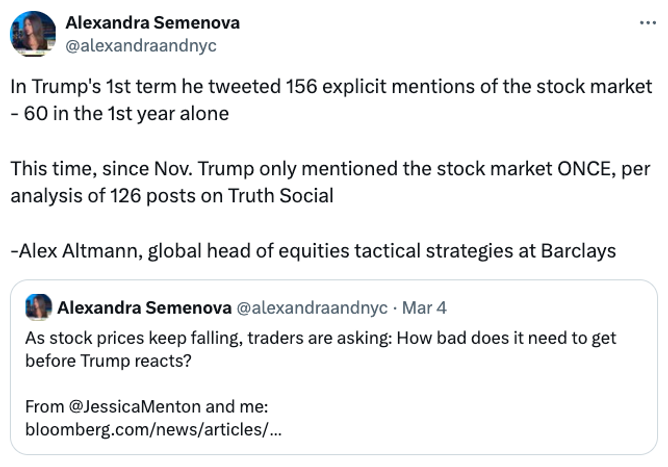 Via Alexandra Semenova Via Alexandra Semenova
During the first Trump administration, the president used the stock market as a barometer of success or failure, and would often pull back on policies that proved unpopular on Wall Street. In the few hours since tariffs were first announced, the market’s dramatic reaction has investors hopeful that Trump will turn on CNBC, see a screen full of red, and roll back some of the tariffs he just dropped like a bomb on markets.
And sure, Trump just gave automakers a break, and Commerce Secretary Henry Lutnick has been making the media rounds to soothe investors that, ultimately, these tariffs won’t be that bad.
But early indications are that this time around won’t be the same, and that the President doesn’t have his eye on markets like he once did. The vast majority of tariffs remain in place, and this administration has made it clear that it’s willing to accept some short-term pain for long-term gains. Or in other words, the famed ‘Trump put’ may not be gone, but it probably won’t save markets the way it once did.
|
|
|
|
QUARTERLY REPORTS
|
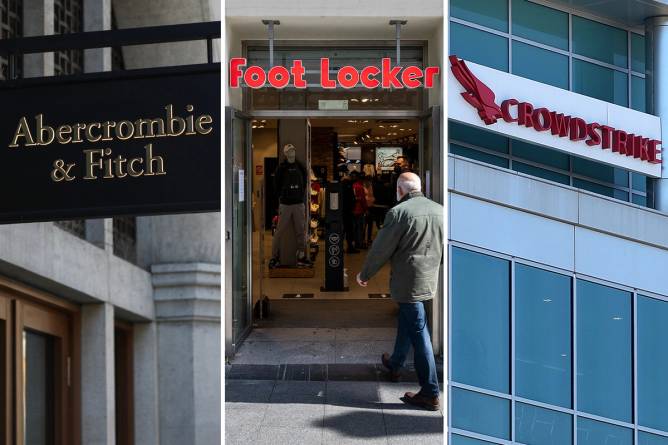
CrowdStrike sank 6.34% even though the cybersecurity company’s quarterly revenue and earnings outstripped expectations, including an impressive 23% increase in annual recurring revenue. The problem is that it’s bracing for a rocky year ahead: Management anticipates earnings per share to land between $3.33 and $3.45 this year, far below Wall Street's consensus target of $3.76.
-
EPS: $1.03, higher than analysts’ estimate of $0.86
-
Revenue: $1.06 billion, higher than the expected $1.03 billion
Abercrombie & Fitch dropped 9.24% despite beating its quarterly estimates on both the top and bottom lines. After investors abandoned this preppy apparel retailer to bargain bins for nearly a decade, the company staged quite a comeback over the last two years, with shares reaching an all-time high in June 2024. But with Trump tariffs looming, investors are worried that all bets for future growth may be off.
-
EPS: $3.57, a bit better than the anticipated $3.54
-
Revenue: $1.58 billion, a slight edge over the expected $1.57 billion
Foot Locker is one retailer that’s shockingly doing A-okay, with shares up 5.22% in the wake of a mixed quarterly earnings report. The sports store has been struggling ever since its biggest business BFF, Nike, began funnelling stale, discounted sneaker inventory through its doors and expecting Foot Locker to pick up the tab, squeezing the retailer’s margins. Nonetheless, the company still swung a Q4 profit, topping expectations.—JD
-
EPS: $0.86, surpassing forecasts of $0.72
-
Revenue: $2.24 billion, falling short of the $2.32 billion expected
|
|
|
|
|
|
presented by Cytonics
Rad to the bone. If approved by the FDA, Cytonics’ CYT-108 will be a first-of-its-kind biologic that actually addresses the root molecular cause of osteoarthritis. It’s a protein therapy that neutralizes the enzymes that chew through cartilage in arthritic joints. Intrigued by this potentially revolutionary advancement? An investment opportunity exists via StartEngine. |
|
|
NEWS
-
Bad news for labor market: ADP reported only 77,000 new jobs added by private employers in February, waaaaay below January’s 186,000.
-
Good news for housing market: Lower interest rates spurred on a 20% spike in weekly mortgage demand.
-
Theoretically, the US dollar should rise on tariff news. Instead, it had its worst three-day stretch in years.
-
China has vowed to expand GDP by 5% this year, despite economic problems both domestically and internationally.
-
The services industry is healthier than expected, though worries about the effects of tariffs remain high.
-
The largest solar farm in the US is being built on a nuclear waste site.
|
|
|
|
CALENDAR
|
We got bad news from the ADP employment report today, and jobs data keeps rolling in Thursday with the weekly initial jobless claims report. Plus, we’ll learn more about the US trade deficit, and wholesale inventories should provide some insight into the state of US manufacturing.
Tomorrow also delivers a wide range of earnings reports, including from Macy’s, Broadcom, Hewlett Packard Enterprise, Kroger, JD.com, The Gap, and Cracker Barrel. We’ll also hear from two members-only wholesale retailers:
 Before the open Before the open
-
BJ’s Wholesale Club seems like an also-ran to big bro Costco, and there’s a reason: lower sales, slower footprint expansion, and a smaller market share make it seem like this retailer is lost in its competitor’s shadow. But the stock itself has had a strong year, up just 1% less than Costco in the last 12 months. Management also just increased membership prices for the first time in seven years, which should do wonders for its bottom line. BJ’s may not hold the market’s attention like Costco, but investors ignore it at their own peril. Consensus: $0.86 EPS, $5.3 billion in revenue.
 After the close After the close
-
Costco, to be clear, is still the king of wholesale retail. Beloved by members and investors alike, impeccable management practices have kept the balance sheets pristine with low debt and high cash flow. Costco also benefits from its defensive nature, offering customers a bargain in good economic times and bad—and given tariff uncertainty, expect consumers to be looking for a deal these days. The only issue could be that it has become a victim of its own success: Shares are looking a bit expensive, and only have about 4% to rise before they hit Wall Street’s average price target. Consensus: $4.01 EPS, $62.61 billion in revenue.
|
|
|
|
✢ A Note From Cytonics
Disclaimer: This Reg CF offering is made available through StartEngine Primary, LLC. This investment is speculative, illiquid, and involves a high degree of risk, including the possible loss of your entire investment.
|
|
ADVERTISE
//
CAREERS
//
SHOP
//
FAQ
Update your email preferences or unsubscribe
.
View our privacy policy
.
Copyright ©
2025
Morning Brew Inc. All rights reserved.
22 W 19th St, 4th Floor, New York, NY 10011
|
|