| | | | | | | | Data is provided by |  |
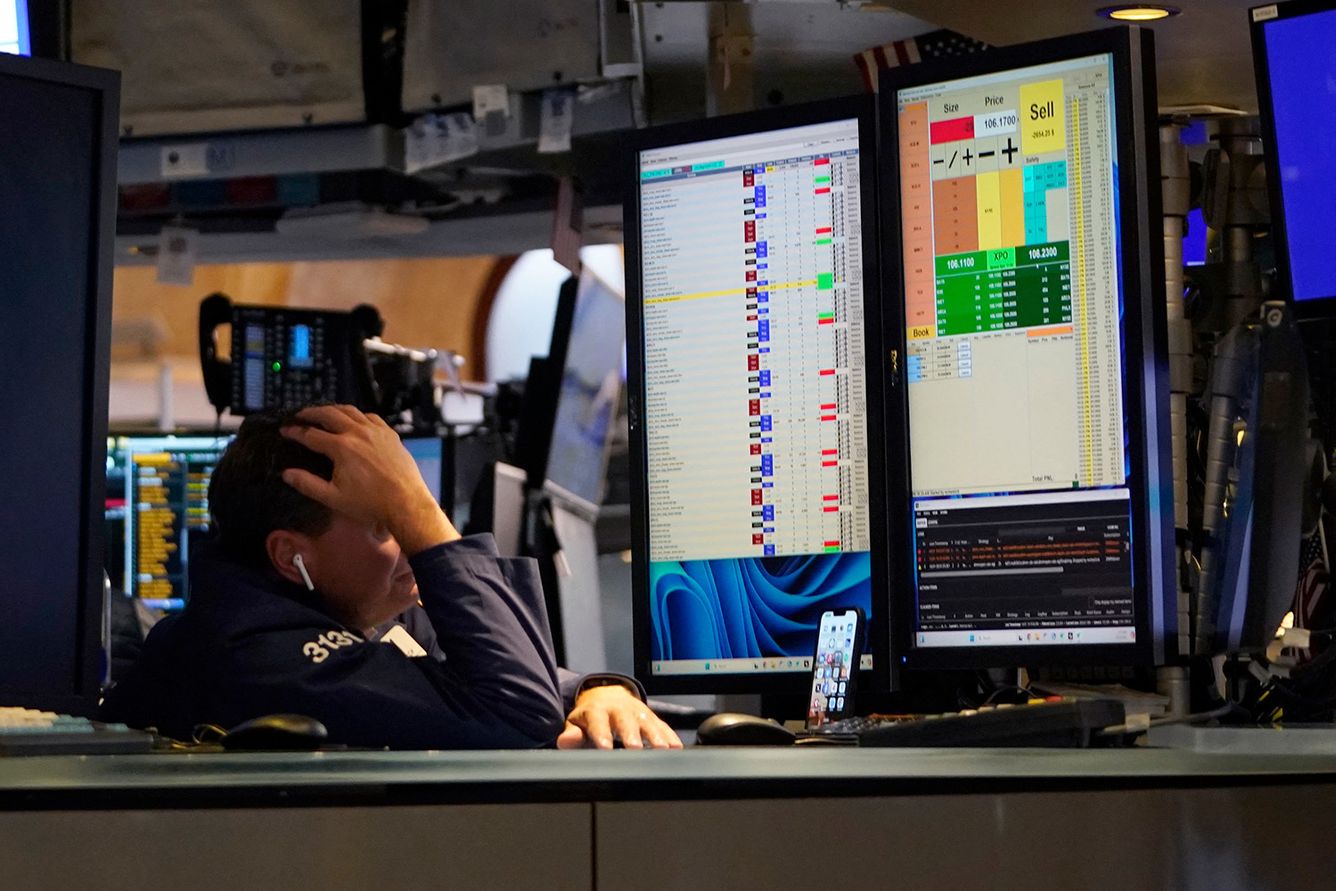
*Stock data as of market close, cryptocurrency data as of 4:00pm ET. Here's what these numbers mean. | - Stocks: Markets sagged as fighting between Israel and Iran continued, with investors worried about escalation after President Trump called for the “unconditional surrender” of Iran’s Supreme Leader Ali Khamenei. The Wall Street Journal reported that he is considering a potential US strike against Iran.
- Commodities: Oil prices popped this morning after Trump warned that Tehran should be evacuated.
- Bonds: Yields sank after US retail sales came in much lower than anticipated, raising fears of an economic slowdown.
| |
|
|---|
CLEAN ENERGY Solar stocks are entering a dark age. A few weeks ago, solar companies plunged on the news that the GOP tax and spending bill completely cut the clean energy credits that make installing rooftop panels cheaper and cover up to 50% of the cost for companies providing solar to homes. But that was just the dress rehearsal. Back then, there was still hope that the Senate would make alterations to the bill that would spare solar. Today, legislators amending the bill doubled down, slashing wind and solar credits originally implemented in the Inflation Reduction Act (IRA) in 2022. If the bill passes in its current form, the tax incentives will wind down in 2026 and be fully erased by 2028. Clean energy stocks, understandably, plummeted. SunRun, which mostly provides solar and battery storage for residential homes, led the way down, sinking 40.04%. SolarEdge Technologies plunged 33.44%, while Enphase Energy dropped 23.97%, First Solar declined 17.89%, and Array Technologies fell 6.66%. Wind companies such as NexEra Energy and Vestas also tumbled. Yet the amendments left room for some nuclear, geothermal, and hydropower renewable energy credits. Is there any bright spot in the carnage? There’s no way around it—there’s a dark cloud hanging over the industry. But one ray of hope for solar investors is First Solar. Jefferies just upgraded the stock from “hold” to “buy” last week, arguing that it’s relatively cheap and that the tax credit cuts shouldn’t completely handicap its growth. “IRA is not as existential for utility-scale,” wrote equity analyst Julien Dumoulin-Smith. At the same time, Jefferies downgraded SunRun from “hold” to “underperform,” given the company focuses on the residential solar market, which has relied heavily on the credits. The rest of the industry won’t fare much better, according to Jefferies, which also gave Enphase and SolarEdge “underperform” ratings.—LB | | |
|
|
Presented by CME Group Whatever the conditions, CME Group provides the tools that global market participants need to manage risk and capture opportunities. With 24-hour access to trading across all major asset classes, you can drive your trading strategy forward with confidence and precision. As the world’s leading derivatives marketplace, CME Group enables clients to optimize portfolios, analyze data, and trade futures, options, cash, and OTC markets—empowering market participants worldwide to efficiently manage their risk. CME Group exchanges offer the widest range of global benchmark products based on interest rates, equity indexes, foreign exchange, energy, agricultural products, cryptocurrency, and metals. See what adding futures can do for you. Learn more about CME Group. |
|
STOCKS 🟢 What’s up - Verve Therapeutics exploded 81.50% on the news that the gene-editing company will be acquired by Eli Lilly in a $1.3 billion deal.
- Reddit popped 6.06% after the social media site rolled out new AI-powered tools for advertisers.
- BGSF surged 34.25% after the staffing company announced it is selling its professional division to INSPYR Solutions for $99 million.
- Jabil gained 8.80% thanks to a strong earnings report for the electronics parts supplier.
- Oil stocks climbed as the conflict between Israel and Iran threatens to grow. Valero Energy rose 2.89%, Chevron gained 1.93%, and Hess added 1.79%.
 What’s down What’s down
- Microsoft fell 0.23% after the Wall Street Journal reported that its partnership with OpenAI is falling apart.
- JetBlue Airways lost 7.88% on the news that it’s cutting costs, including reducing its number of flights, due to softer-than-expected travel demand.
- Lennar sank 4.42% after the homebuilder beat revenue estimates last quarter but missed profit forecasts.
- T-Mobile tumbled 4.14% on the news that major shareholder Softbank sold 21.5 million shares of the telecommunications company.
- Airline stocks sank as the price of oil rose throughout the day. United Airlines lost 6.18%, while Delta Air Lines fell 4.33%.
|
|
|
STOCK OF THE DAY A few weeks ago, the Financial Times spotted a company called Regencell Bioscience, a Hong Kong-based biotech that develops traditional Chinese herbal remedies to treat ADHD and autism. What made this little-known stock so interesting is that it had somehow exploded over 15,000% in 2025 when it caught FT’s eye. Now, it’s up over 46,000% year to date thanks to a 38-for-1 stock split that took effect yesterday. The REALLY interesting thing about Regencell is that it has no sales whatsoever. It also reported a net loss of just over $6 million in fiscal year 2023, and around $4.3 million in fiscal 2024, which ended last June. So how did a company with a market cap of $53 million a year ago suddenly become worth about $30 billion, despite such poor finances? It doesn’t. Let’s be clear: This 12-person company incorporated in the Cayman Islands isn’t exactly the stuff of Warren Buffett’s investment dreams. Only 6% of its shares are available for public trading, according to Bloomberg, while the rest are owned by insiders who are certainly enjoying a hefty paper profit today. But while they may be celebrating Regencell’s wild ride higher, the lack of any sort of fundamental support for the stock’s price means the rest of us should probably steer very clear of it. |
|
|
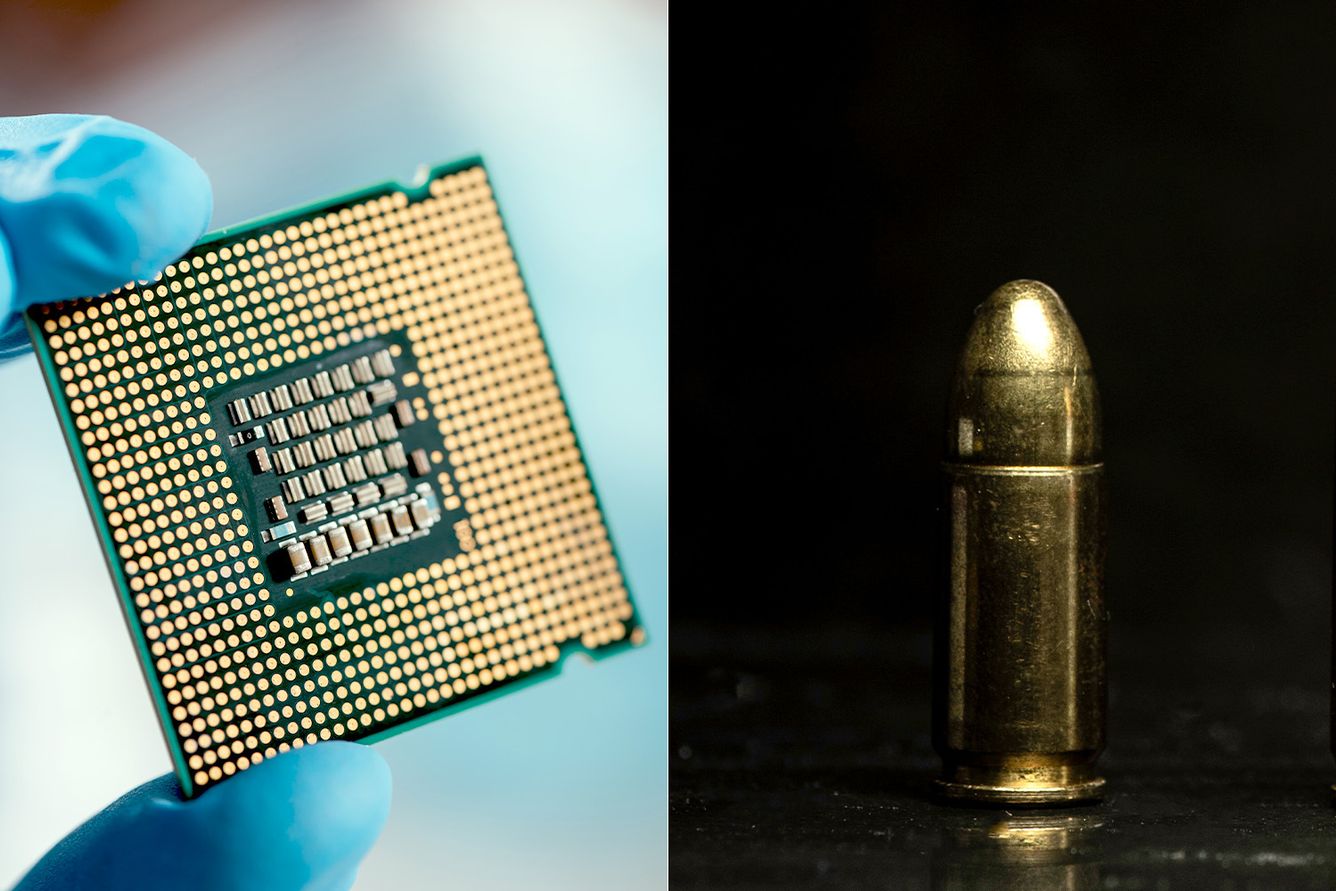
AI You might have expected major defense stocks to skyrocket on the news that two major Middle Eastern powerhouses have begun fighting one another. But it hasn’t been quite that simple. Sure, defense behemoths like Lockheed Martin, Northrop Grumman, and General Dynamics jumped last Friday after Israel attacked Iran. But since then they’ve cooled from last week’s highs—even as the fighting has escalated. “The longer a conflict takes, there’s less and less benefit for the defense contractor, which might seem counterintuitive,” explained Nicolas Owens, defense equity analyst at Morningstar, in an interview with Brew Markets. “They make money developing the next generation of weapons, they don’t when people are shooting at each other.” Owens added that Friday’s rally likely had more to do with oil prices than defense contracts themselves. Defense is going AI-mode While the big dogs might be lagging, their younger, tech-forward counterparts are climbing the ranks. “Defense stocks are bifurcating: The underperforming have-nots are the big Department of Defense contractors, with meager share price gains so far this year,” wrote Jackie Doherty, contributing editor at Yardeni Research, in a note. “The outperforming haves are innovative defense tech companies redefining not only how war is waged in the AI era, but how the Defense Department procures weapon systems.” Palantir, arguably the leader of this new cohort, is up 85% in 2025 and just hit a new all-time high yesterday, outpacing the S&P Aerospace & Defense Select Industry Index, which has risen roughly 20% year to day. Cashing in on AI A group of AI-driven startups are shaping the ever-evolving defense industry—for better or worse. That’s probably why it feels like just about everyone is throwing money at defense tech and seeing what sticks. The CEO of defense tech unicorn Anduril, Palmer Lucky, told CNBC that his company, which has most recently been valued at over $30 billion, will "definitely" go public. Spotify CEO Daniel Ek just led a roughly $690 million funding round for the German AI drone company whose name matches how terrifying it sounds: Helsing. Even more mainstream tech companies are getting defensive. Just yesterday, OpenAI won a $200 million contract with the US Defense Department. Oracle also just announced a program that helps connect AI vendors with the Pentagon. And you thought the images your little cousin creates on Midjourney were as scary as AI would get.—LB | | |
|
|
Together With CME Group Where risk meets opportunity. CME Group helps you manage risk and capture opportunities in all market environments. Capitalize on around-the-clock access to highly liquid global futures and options markets across all major asset classes. See what adding futures can do for you. Learn more. |
|
NEWS - Amazon is extending its Prime Day sales event to four days this year.
- Streaming services accounted for 44.8% of total TV viewership last month, its largest share ever and more than broadcast (20.1%) and cable (24.1%) combined.
- Tariffs may land on the Supreme Court’s docket as early as this year.
- No more blue ketchup: Kraft Heinz will remove artificial dyes from US products by 2027.
- Pharma news: The FDA is launching a voucher program designed to cut review time for priority drugs. Meanwhile, the Trump administration is considering ways to restrict pharmaceutical companies from advertising directly to patients.
- The Senate is expected to vote on the crypto-focused GENIUS Act this afternoon, while the Federal Reserve’s FOMC meeting began today.
|
|
|
CALENDAR There’s nothing worth mentioning on the earnings calendar tomorrow, though we will get some more economic data from the housing starts report on Wednesday. This breakdown of new residential construction across the country should shed some light on where the housing market is heading, particularly when it comes to the low supply that has plagued would-be homeowners for years now. The real excitement comes tomorrow afternoon when the FOMC meeting concludes and Jerome Powell pokes his head out like Punxsutawney Phil to let us know if we’ll get an interest rate cut, or a few more weeks of high rates. The market is betting it’s the latter: There is currently an over-99% chance that the Fed keeps rates right where they are after this meeting. |
|
|
RECS  5 undervalued stocks to buy now before they rally any higher. 5 undervalued stocks to buy now before they rally any higher.
 But seriously, why does every celebrity have a cellphone plan these days? But seriously, why does every celebrity have a cellphone plan these days?
 Welcome to the “nothing ever happens” market. Welcome to the “nothing ever happens” market.
 One chart breaking down how every major asset class has performed since 2020. One chart breaking down how every major asset class has performed since 2020.
 Chase Sapphire is raising its fees to almost $795. Is a $1,000-a-year premium credit card coming soon to a wallet near you? Chase Sapphire is raising its fees to almost $795. Is a $1,000-a-year premium credit card coming soon to a wallet near you?
|
|
|
|
ADVERTISE // CAREERS // SHOP // FAQ
Update your email preferences or unsubscribe .
View our privacy policy .
Copyright © 2025 Morning Brew Inc. All rights reserved.
22 W 19th St, 4th Floor, New York, NY 10011 |
|