|
Good afternoon. The worlds of finance and sports are beginning to overlap in weird and wonderful ways. One example is the New York Mets, owned by billionaire hedge fund manager Steven Cohen.
Cohen isn’t afraid to use his wealth to his team’s advantage, and this weekend he broke open the piggy bank, acquiring Juan Soto from the Yankees in a 15-year, $765 million deal. That’s the largest contract in sports history, and more than the career salary earnings of Tom Brady and Lebron James combined.
That means the 26-year-old phenom will earn about $51 million a year until he’s 41 years old, at which point we assume he’ll start to get serious about his finances.
—Mark Reeth & Lucy Brewster
|
|
|
|
|
|
|
|
|
|
|
|
|
|
|
|
| Data is provided by |

|
*Stock data as of market close.
Here's what these numbers mean.
|
-
Stocks kicked the week off in the red, dragged down by Nvidia (more on why below).
-
Oil got a few boosts today: The Chinese government’s move toward monetary easing bodes well for crude demand, while the fall of the Syrian government likely means a near-term drop in supply.
-
Gold rose as investors stored their money in the safe-haven investment ahead of the key CPI reading on Wednesday.
|
|
|
|
|
TRADE WAR
|
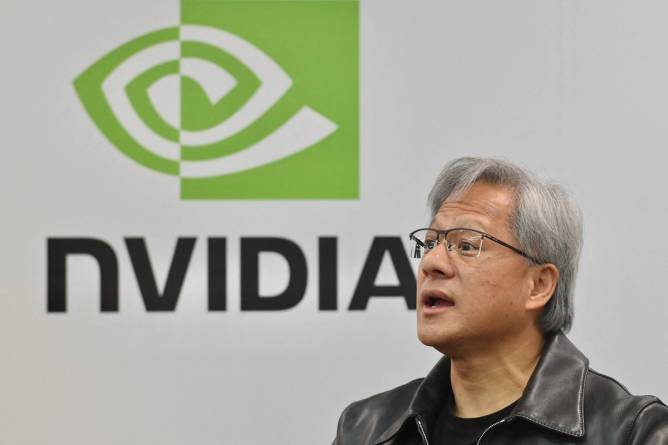
Nvidia has ascended from a tech company only nerds understood to household name status in just a few short years. But the company may have finally flown too close to the sun.
The chipmaker’s shares dropped 2.55% today after it became the centerpiece of the latest battle in the trade war between the US and China.
Chinese regulators announced that they are investigating Nvidia for antimonopoly violations. The State Administration for Market Regulation (SAMR) is particularly focused on the chipmaker’s 2020 acquisition of Israeli tech company Mellanox. The SAMR allowed the deal to go through on the condition that Nvidia not discriminate against Chinese companies—something the regulator argues it has done in light of the Biden administration’s policies to slow exports of semiconductor chips to China.
The US has been blocking American chipmakers, including Nvidia, from selling their most advanced chips to China over the past three years, and this is just the latest shot fired in an escalating global AI arms race. Incoming President-elect Donald Trump has vowed to slap aggressive tariffs on Chinese goods, potentially ramping up the trade war between the two countries in the near future.
Probe around the globe
While analysts argue China is using the antitrust case as retaliation against the Biden administration’s latest regulatory blockade, Chinese regulators aren’t the only ones questioning whether Nvidia’s dominance is aboveboard.
Earlier this year, the US Justice Department probed Nvidia for violating antitrust laws. France also investigated the tech company for antitrust violations over the summer, while the EU probed the firm in 2023 for similar allegations.
In spite of today's news, the vast majority of analysts still have a “buy” rating on Nvidia. The pros say it's unlikely that this investigation will change the fundamental investment thesis for Nvidia, especially since antitrust cases can take years to play out.
But it’s a reminder that when a stock has flown as high as Nvidia, any bad news sends investors scrambling in fear that it's finally getting burned.—LB
|
|
|
|
|
|
sponsored by MIAX
|
Discover the future of trading with MIAX Sapphire, the newest options exchange from MIAX—a technology-driven leader in US options markets.
With the electronic exchange already live, MIAX Sapphire is gearing up to bring even more to the industry with the launch of a state-of-the-art trading floor in Miami, Wall Street South, in 2025.
MIAX Sapphire combines the benefits of electronic trading with the dynamics of an open-outcry floor, providing flexibility and improved price discovery for market participants.
Find out more about this new gem.
|
|
|
STOCKS
🟢 What’s up
-
It’s nice to be wanted: S&P Dow Jones Indices will add software firm Workday and asset manager Apollo Global Management to the S&P 500 later this month. Workday popped 5.06%, though Apollo dropped 3.04%.
-
SolarEdge Technologies soared 11.74% after it announced it will begin selling its US-made home battery, which will give the solar-power company oodles of tax credits.
-
Talk about a second chance: Super Micro Computer rose 0.52% on the news that Nasdaq will give the server maker until February to publish its much-delayed annual report.
-
Rivian Automotive climbed 11.15% after Benchmark analysts initiated coverage of the EV maker with a “buy” rating.
 What’s down What’s down
-
It’s tough to be snubbed: AppLovin shareholders were banking on the stock’s inclusion in the S&P 500. When it wasn’t added to the index, shares of the app monetization company plunged 14.68%.
-
Comcast dropped 9.50% after CEO Dave Watson revealed that the cable provider expects to lose another 100,000 subscribers in the fourth quarter.
-
Rent the Runway tumbled 21.84% after the retail rental company beat revenue estimates and narrowed its earnings loss. Shareholders didn’t like management’s dour fiscal forecast.
-
AMD slid 5.57% after Bank of America analysts downgraded the company due to upgraded competition from Nvidia.
|
|
|
|
VIDEO OF THE DAY
|
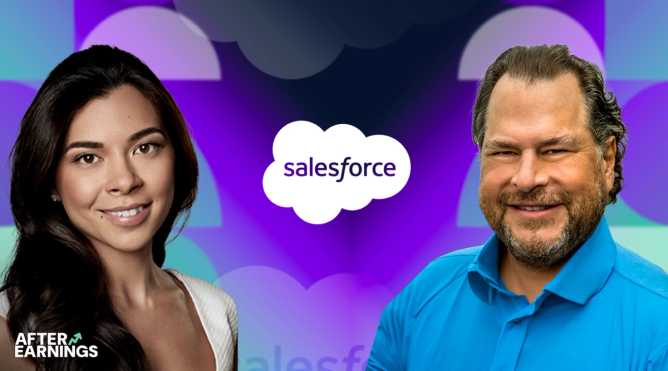
An 8,000% gain in the last 20 years isn’t bad at all, but Salesforce CEO Marc Benioff has no intention of taking his foot off the gas.
That much was made clear in Salesforce’s latest earnings announcement, in which the software-as-a-service company’s big plans for utilizing AI to upgrade customer offerings was met with some serious shareholder enthusiasm. The stock popped to a new all-time high after management upgraded its annual revenue guidance.
Our own Ann Berry sat down with Marc Benioff to discuss earnings, what Salesforce can do with its powerful AgentForce AI, and why Benioff has a pretty low opinion of Microsoft’s CoPilot.
Click here to watch the latest episode of After Earnings and learn more about how Salesforce plans to become the biggest name in AI agents.
|
|
|
|
BIG DEALS
|
Happy merger Monday, one and all!
Regulators like the SEC, FTC, and Department of Justice have stepped up their game under the Biden administration, playing spoiler to companies attempting to join forces. Perhaps the most recent and visible example of this is the failed merger between JetBlue Airways and Spirit Airlines, which was shot down by a federal judge back in January, ultimately leading to Spirit’s bankruptcy in November.
But there’s a new sheriff in town: Donald Trump. A second Trump administration promises to usher in an era of regulatory flexibility for mergers and acquisitions, and some companies are already pulling the trigger on deals that probably wouldn’t have gained approval under the current administration.
Don Draper likes what he sees: Omnicom Group, the world’s third-largest ad company, will acquire Interpublic Group, the world’s fourth-largest advertiser, to create a new powerhouse in the world of media advertising. The $13.25 billion all-stock acquisition is expected to close in the second half of 2025, and promises to upend the ad ecosystem at a time when new technology like AI threatens traditional players. Omnicom sank 10.19% today, while Interpublic rose 3.55%.
Willy Wonka agrees: In 2016, snack foods titan Mondelez International eventually gave up on a $23 billion bid to acquire candy king Hershey Co. Now, Bloomberg reports that Mondelez has sweetened the deal, gearing up to acquire Hershey for around $50 billion. Discussions are still in the early stages, but a team-up makes sense on paper: Rising prices thanks to high inflation, combined with health-conscious customers, have hurt the bottom lines of consumer goods companies everywhere. Mondelez dropped 2.26% today, while Hershey soared 10.85%.
How to invest
More deals like these are likely on the horizon, which means investors should keep their eyes peeled for opportunities. One sector they should watch closely: mid-cap banks.
“We believe bank M&A, which in part has been hamstrung by regulation, may increase under the Trump administration,” Bank of America analysts wrote in a note last week. “The improved buyer currencies, scope for increased capital flexibility via potential regulatory easing, and a reduced capital hit from rate levels (assuming rates remain within recent trading range) are coming together to create a relatively favorable backdrop for banks to consider engaging in M&A, in our view.”
Keep in mind that not every deal is a sure thing: Trump has already declared he will block the acquisition of US Steel by Japanese competitor Nippon Steel. But with more company combinations coming soon, there will be plenty of chances for investors to profit.—MR
|
|
|
|
|
|
sponsored by MIAX
Discover the future of options trading. The experts over at MIAX make it easy to understand the complexities of trading options on electronic exchanges, delivering top-tier market data and enhancing liquidity to ensure smoother, more efficient trades. Think you’re well versed in the market? Put your knowledge to the test in this crossword puzzle. |
|
|
NEWS
-
Too many chefs in the kitchen: The fourth activist investor in 10 years to take a shot at struggling retailer Macy’s has joined the fray.
-
Rug pulls are a fun description of cryptocurrency fraud, and victims are learning that just because crypto has become more widely accepted doesn’t mean the scams have ended.
-
BP has pulled the plug on its offshore wind power projects, shifting them all into a joint venture with Japan’s Jera.
-
Jensen Huang is worth $127 billion, but the Nvidia CEO is avoiding about $8 billion in taxes thanks to various loopholes only the truly wealthy get to enjoy.
-
Is nothing sacred? The oldest known stone tablet containing the Ten Commandments will go up for auction next week.
-
Here’s a Spotify Wrapped that has been tailor-made for the US jobs market.
|
|
|
|
CALENDAR
|
The NFIB Optimism Index gives us the big picture for small businesses around the country. The survey provides insight into the state of hiring, inventories, and broad business confidence for small companies, which are key contributors to the overall economy. Last month’s survey showed that optimism rose slightly, though it remained under the survey’s 50-year average, while uncertainty jumped to its highest point ever. Economists hope that, with the election behind us, smaller businesses will have more confidence about the future.
 Before the open Before the open
AutoZone missed analyst expectations last quarter, though both the top and bottom lines increased, and shareholders will want to see a turnaround this quarter. Luckily, AutoZone stands to benefit from several long-term trends. For instance, cars are better made than ever before, which means that people keep them for longer, which means they endure more wear and tear over time, leaving car owners to turn to AutoZone for minor repairs and automotive gear. Even if the company doesn’t impress this quarter, the stock is a Wall Street favorite: 16 of the 20 analysts covering the company rate it a “buy.” Consensus: $33.69 EPS, $4.31 billion in revenue.
 After the close After the close
GameStop is like a college freshman desperately trying to shed his old high school personality for a fresh start. But the videogame retailer just can’t shake its meme stock roots, as illustrated by its latest surge following a recent post by Roaring Kitty on X. Shareholders will eventually have to stop enjoying the ride and begin to ask about management’s plans for deploying all the capital it accrued during its meme heyday, but no answer has been forthcoming as of yet. Consensus: -$0.03 EPS, $887.7 million in revenue.
|
|
|
ADVERTISE
//
CAREERS
//
SHOP
//
FAQ
Update your email preferences or unsubscribe
.
View our privacy policy
.
Copyright ©
2024
Morning Brew. All rights reserved.
22 W 19th St, 4th Floor, New York, NY 10011
|
|