| | | | | | | | Data is provided by |  |
*Stock data as of market close. Here's what these numbers mean. | - Stocks: The Russell 2000 went 967 days without hitting a new record high until yesterday. Looks like it will have to keep waiting for the next one—the small-cap-focused index fell, even as the Dow, Nasdaq, and S&P 500 rose to new closing highs.
- Bonds: 2-year yields and 10-year yields both hit two-week intraday highs even after the Fed cut interest rates, indicating that traders still aren’t sold on how the economy will perform in the months ahead.
- Commodities: Arabica futures fell on reports that lawmakers will introduce a bipartisan bill to exempt coffee from tariffs.
| |
|
|---|
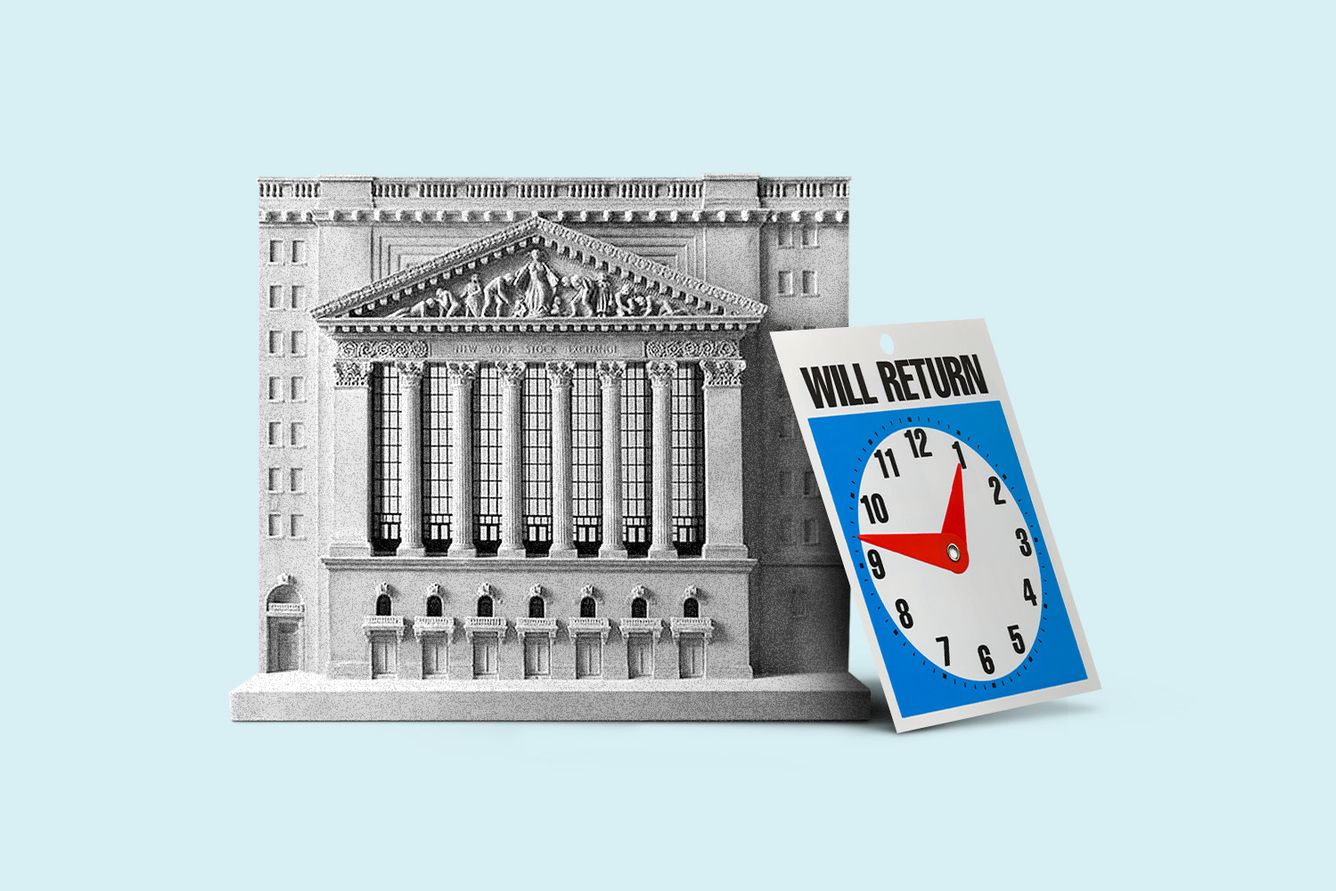
EARNINGS President Trump floats a lot of off-the-cuff ideas via Truth Social—but it seems like his comments about trimming down the corporate earnings calendar might actually be for real. Today, SEC Chair Paul Atkins announced that the agency will propose a rule change to switch from a quarterly earnings schedule to a semiannual cadence, reversing a requirement that’s been around since 1970. If the rule change is passed, it would be up to companies to decide whether their report card comes out four times a year or just twice. Trump’s argument, which he laid out in a post on Truth Social, is essentially that reporting every quarter is too onerous and expensive for management, and keeps companies too focused on short-term earnings results instead of investing for the long term. “For the sake of shareholders and public companies, the market can decide what the proper cadence is,” Atkins said on CNBC’s Squawk Box today. Warren Buffett and Jamie Dimon suggested something similar back in 2018, arguing public companies are fixated on the short term (although they were talking about limiting guidance, not throwing away quarterly earnings altogether). We’ve also written before about how onerous paperwork is part of the reason there are fewer and fewer companies going public in the US these days. But most economists and analysts have strongly pushed back against the idea. “Students don’t like grades and many business leaders don’t like quarterly earnings reports. The reason is the same,” wrote Larry Summers on X. “Being monitored and accountable for results is painful. The President's idea of eliminating quarterly reports will cause companies and the markets to function less well.” What would fewer earnings mean for investors? For companies, less homework would be welcome. But for investors, limiting earnings reports would reduce transparency, and inevitably lead to more volatility when earnings are announced. This would especially hurt everyday retail investors, who don’t have the ample information infrastructure that Wall Street does. The gap in publicly available information would also increase the risk of insider trading, critics argue. On top of that, it’s unclear if reporting twice a year instead of quarterly would really change the way executives invest for the long haul. After all, six months isn’t that long. The US wouldn’t be the first to go down this route, either: In 2013, the EU allowed companies to choose whether they report quarterly or semiannually. The Wall Street Journal noted that there hasn’t been a surge of better management or more successful companies in Europe as a result. In fact, studies on Europe’s change have shown fewer earnings announcements lead to less accurate analyst forecasts. Perhaps the most devastating impact of all, however, would be fewer Tour de Earnings columns in this newsletter.—LB | | |
|
|
Presented By Public.com Turns out, that question isn’t just for early stage couples. It’s what many retail investors are asking about AI lately. So far, we’ve seen AI help retail investors with building customized portfolios and researching the market. But what’s next? Brew Markets’ Ann Berry sits down with Public COO Stephen Sikes to answer that question. They’ll explore the current uses of AI in the retail investing space and where it could expand in the future. What do we know so far? Public found 25% of its members who use their AI research assistant for investing FAQs make a trade within three hours of asking a question. Get details about the ripple effect of this AI usage and what to expect moving forward. Save your spot at the event. |
|
STOCKS 🟢 What’s up - Reports of a strong debut for the iPhone 17 Pro coupled with an upgrade from JPMorgan analysts boosted Apple by 3.2%.
- Tesla gained 2.21% after Baird analysts raised their price target on the EV maker from $320 to $548, a stunning 71% increase.
- Oracle gained 4.06% after Trump announced that the US and China are making progress on an agreement about what to do with TikTok.
- Brighthouse Financial soared 27.24% on reports that a group of buyers led by Aquarion are preparing to acquire the insurer.
- Hard drives are in high demand thanks to the AI race—sentiment that pushed Seagate up 2.12% and Western Digital up 1.41%.
 What’s down What’s down
- Scholastic tumbled 12.02% after the company behind your favorite elementary school book fairs reported a big miss in earnings last quarter.
- Intel gave back some of yesterday’s gains, falling 3.24% after Citigroup analysts downgraded the stock, saying the chip maker’s valuation is getting out of control.
- Lennar lost 4.18% after the homebuilder missed top- and bottom-line earnings estimates, though noted that lower interest rates should help in coming quarters.
- Micron Technology fell 3.65%, ending its 12-day winning streak, its longest ever.
|
|
|
STOCK OF THE DAY Global tariffs have disrupted both import and export businesses—but what about the guys in between who are doing all the shipping to and fro? Turns out, they’re OK actually. FedEx reported surprisingly robust earnings after the close yesterday evening, beating both EPS and sales forecasts and projecting revenue growth of 4% to 6% next year, well above Wall Street’s expectations of 1.2%. Shares rose 2.12% to $231.75 today. That said, it wasn’t all good news. Management noted that international package volume fell, even though domestic volume helped make up the difference. They also warned of a $1 billion headwind this year due to global trade volatility. But the real question hanging over FedEx was the end of the de minimis exemption last month, which suddenly made small, cheap packages more expensive for customers. While the company was able to anticipate the loophole being closed and prepare accordingly, it still faces another problem: the all-important holiday shopping season, and what higher costs might do to FedEx’s business in the coming months. Management seemed confident that FedEx will be fine, but analysts remain skeptical: Morgan Stanley maintained its “underweight” rating and $200 price target today, while Bank of America raised its price target to $244 but kept its “neutral” rating in place.—MR | | |
|
|
REAL ESTATE Gee, what a huge difference a tiny cut can make. The Federal Reserve’s decision to cut interest rates this week has already proved to be a potent shot in the arm for the US housing market. Mortgage rates fell this week to an average of 6.26% for a 30-year fixed-rate loan, according to Freddie Mac—an 11-month low that has boosted mortgage applications by almost 30% week over week. This mini-mortgage boom isn’t just a boon to homebuyers, but to builders as well. Weighed down by a double-whammy of sluggish sales and high interest rates on their own loans, single-family home construction plunged to two-and-a-half-year lows in August. But hope is now creeping back into hard-hat zones that prospects could improve soon. “The rate cut will have a direct, beneficial impact on builders, especially those relying on acquisition, development, and construction loans,” the National Association of Home Builders noted in a statement. “These loans are key to getting new homes built, particularly by private builders, who construct more than 60% of the country’s single-family homes. Lower borrowing costs for builders could help ease housing supply constraints across the country.” Homebuilder stocks have been gaining steam over the last few weeks in anticipation of lower interest rates unlocking more profits. DR Horton, the largest residential construction company in the US, shot up over 30% this quarter, according to Reuters. Number two KB Home rose 20%, as did luxury builder Toll Brothers. Home improvement megastores Lowe's and Home Depot are also up 21% and 14% this quarter. Do more rate cuts = more relief? The Fed hinted at two more rate cuts this year. But that’s no guarantee—and neither are lower mortgage rates. Case in point: Back in September 2024, the Fed cut rates for the first time in more than four years; a week later, home loan rates plummeted to two-year lows of 6.08%. But even though the Fed cut rates two more times that year, mortgage rates didn’t keep falling. Instead, by January 2025, they had risen to nearly 7%. And even if mortgage rates do continue to fall, Fed Chair Jerome Powell has pointed out that monetary policy is no magic pill to solve the housing market’s many problems (like labor shortages, supply chain issues, and high regulatory costs). In other words, it’s best to treat this Fed cut like a little freshen-upper rather than an Extreme Makeover overhaul.—JD The housing market and the stock market go together like tacos and Tuesdays. To keep up with all things real estate investing, sign up here to get The Playbook sent to your inbox every Thursday afternoon free of charge. | | |
|
|
Together With MFS Investment Management Tariffs + freezes + policies. Oh my! Instead of trying to take on the world (and all its shifting macroeconomics), allow MFS to help you understand the current state of the global market. In this article, they help break down five key themes that could color the remainder of 2025. Check it out. |
|
NEWS - Forget “sell America”: Today’s hot new trade is “hedge America,” or protecting your investments from a declining US dollar.
- The Trump administration is exploring plans to use the $550 billion investment fund created by Japan to bring back manufacturing in the US.
- A federal judge struck down President Trump’s $15 billion defamation lawsuit against The New York Times.
- OpenAI plans to spend $100 billion on backup server rentals over the next five years.
- SMBC will pay $912 million to raise its stake in US brokerage Jefferies from 15% to 20%.
- Ray Dalio warned that the global monetary order is at risk due to the growing piles of national debt. Speaking of which, don’t expect that interest rate cuts will help ease the burden.
- Two more rate cuts are coming this year, according to Federal Reserve Bank of Minneapolis President Neel Kashkari. Elsewhere, Stephen Miran, the newest member of the Fed, said he did not inform President Trump of his decision to vote for a half-point rate cut at the latest FOMC meeting.
|
|
|
CALENDAR This week, we got the Fed’s latest monetary move. Next week, we get a bunch of commentary about it, with a whole gaggle of Federal Reserve folks making speaking appearances. Stephen Miran’s speech on Monday will be particularly worth watching, considering he’s the new guy at the central bank and square at the center of President Trump’s efforts to bring the Fed to heel. As for economic reports, there’s plenty on the docket. We’ve got services PMI on Tuesday and new home sales on Wednesday, followed by a Thursday filled with initial jobless claims, durable goods orders, existing home sales, and a third and final reading of Q2 GDP. Friday is really the day to circle on your calendar, with the August PCE report and a final reading of September consumer sentiment. We’re smack dab in the middle of the lull between earnings seasons, and it’s really starting to show: There’s only a handful of companies worth keeping an eye on next week. Tuesday: Autozone, Micron Technology Wednesday: KB Home, Cintas Thursday: Costco, CarMax, BlackBerry |
|
|
RECS  There’s a seasonal stock trading pattern coming up that you should know about: Sell Rosh Hashana; buy Yom Kippur. There’s a seasonal stock trading pattern coming up that you should know about: Sell Rosh Hashana; buy Yom Kippur.
💲 Here’s where you should invest $100,000 right now.  Spending on AI cloud infrastructure is expected to explode by 300% through 2028. Here are 15 stocks that can cash in. Spending on AI cloud infrastructure is expected to explode by 300% through 2028. Here are 15 stocks that can cash in.
 Great weekend read: A performance artist bought the Enron name for peanuts and concocted an elaborate caricature of corporate excess. It turned into a financial mess. Great weekend read: A performance artist bought the Enron name for peanuts and concocted an elaborate caricature of corporate excess. It turned into a financial mess.
🛒 Parsing AI’s potential: Right now, AI is helping retail investors build portfolios and do market research. But what’s next? Ann Berry is sitting down with Public COO Stephen Sikes to discuss some possibilities. Join them.* *A message from our sponsor. |
|
|
|
ADVERTISE // CAREERS // SHOP // FAQ
Update your email preferences or unsubscribe .
View our privacy policy .
Copyright © 2025 Morning Brew Inc. All rights reserved.
22 W 19th St, 4th Floor, New York, NY 10011 |
|