| | | | | | | | Data is provided by |  |
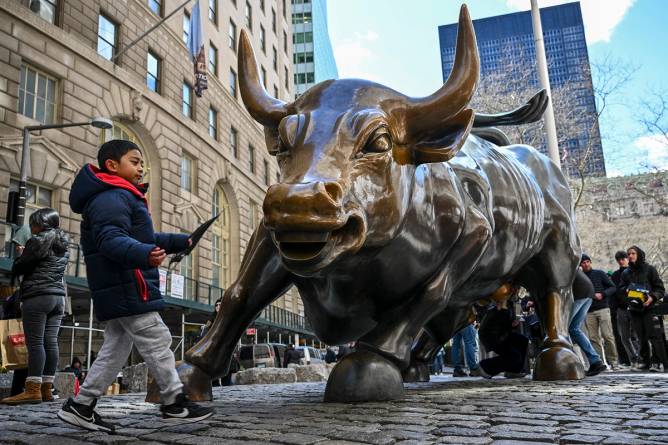
*Stock data as of market close. Here's what these numbers mean. | - Stocks: Investors cheered the news of an EU & US trade deal over the weekend, pushing the S&P 500 above 6,400 for the first time ever. But the index gave up most of its gains late in the day as attention turned to a huge week of data ahead (more on that in a minute).
- Trade: Today was the first day of discussions between US and Chinese negotiators in Stockholm to keep the trade war truce alive. Elsewhere, President Trump foresees a baseline 15% to 20% tariff rate for the rest of the world.
- Commodities: Gold fell as trade deal hopes heightened investors’ risk appetite, while oil spiked higher after Trump gave Russia a 10- to 12-day deadline to sign a truce with Ukraine.
| |
|
|---|
FORECAST After a week of fretting about why retail traders are willing to invest just because Sydney Sweeney is wearing denim, it looks like Wall Street finally got tired of fighting the rising tide. Oppenheimer’s Chief Investment Strategist John Stoltzfus raised his price target on the S&P 500 from 5,950 to 7,100 today, 11% above today’s close. That makes him the biggest bull on Wall Street. To be fair, Stoltzfus was the biggest bull on Wall Street at the beginning of this year, too. Back in January, his price target was also 7,100—before he cut it following Liberation Day. “With the announcement of trade deals by President Trump and his administration (last week with Japan and then the announcement this Sunday by the President of a deal with the EU) we believe that enough ‘tariff hurdles’ have been overcome for now to reinstate our original price target for the S&P 500 of 7,100 by year-end,” Stoltzfus wrote. In a note to clients this morning, Morgan Stanley Chief US Equity Strategist Mike Wilson sounded a bit more cautiously optimistic. He is leaning toward his bull case of the S&P 500 hitting 7,200 by the middle of 2026, citing strong earnings growth, a weak dollar, and pent-up demand from investors. “Of course, the near-term set up is not without risks—back-end rates, tariff-related inflation and softening seasonals,” Wilson wrote. “Thus, we do expect some consolidation tactically, but we would reiterate that we expect pull-backs to be shallow (mid-to-high single digit percent range), and we're buyers of dips.” The week ahead While some pros are banking on higher highs ahead, many on Wall Street worry that investor enthusiasm is outpacing the market’s ability to keep the rally alive—and that things may come to a head this week, which is shaping up to be a make-or-break moment that CNBC has dubbed “the Olympics for market watchers.” On Wednesday, we get the ADP employment report and a look at second-quarter GDP, and we’ll hear from Jerome Powell about the Federal Reserve’s latest interest rate decision. Spoiler alert: The market thinks there’s a 96.9% chance the Fed keeps rates uncut. Oh, and don’t forget that both Microsoft and Meta Platforms report their latest earnings after market close. The earnings keep coming on Thursday, when we hear from Amazon and Apple. We’ll also get a look at inflation with the latest PCE reading, which is widely expected to begin reflecting the effects of Trump’s tariffs in April. And don’t forget that a federal appeals court will hear oral arguments about whether or not Trump’s tariffs are actually legal in the first place. Speaking of tariffs, Friday marks the August 1 deadline for the many trade deals the US has yet to lock down. It’s also the day that the monthly US nonfarm payrolls report, a pivotal look at the labor market, is revealed. If you thought a week of meme stock mayhem was fun, just wait until the data starts dropping this week.—MR | | |
|
|
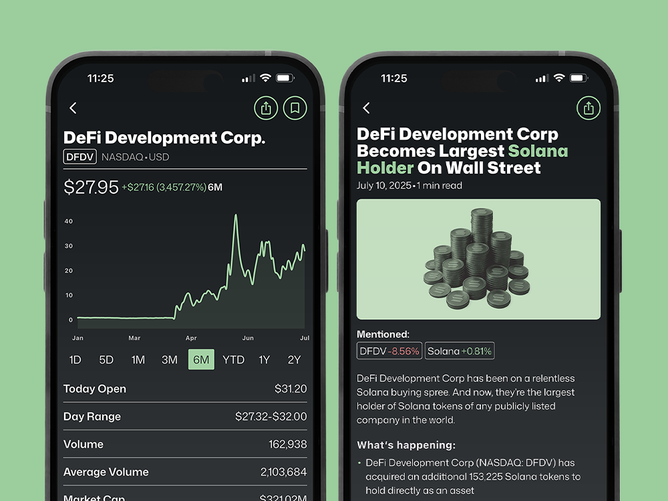
Presented By The New Money Did you hear? There’s a new free app that can connect you to smarter insights on what’s happening with the markets at any moment. The New Money makes it easier than ever to discover up-and-coming public companies, new IPOs, emerging themes, and the bets being made by some of the world’s smartest investors. Explore top-performing companies and trends, track your portfolio, and get real-time alerts. Check out daily exclusive content on the world’s most exciting stocks and investing trends. It’s the markets and trends that matter, made simple. Download the app now. |
|
STOCKS 🟢 What’s up - Tesla jumped 3.02% after the company signed a $16.5 billion deal with Samsung to produce AI chips. Samsung rose 6.83%.
- Nike surged 3.89% after the athletic apparel brand got an upgrade from JP Morgan, which now gives the stock an “overweight” rating due to the company’s turnaround plan.
- The chips are up: Advanced Micro Devices raised the price of its chip, signaling strong demand for AI hardware and pulling the rest of the sector up with it. AMD rose 4.32%, Super Micro Computer jumped 10.24%, ASML climbed 2.63%, and Nvidia rose 1.87%.
- Celcuity skyrocketed 167.18% after the biotech firm reported encouraging results in a Phase 3 breast cancer trial.
- Part of the latest trade deal includes stipulations that the EU purchase $750 billion worth of US energy. Domestic producers rose on the news, including New Fortress Energy (up 5.56%), Venture Global (up 4.26%) and Devon Energy (up 3.49%).
 What’s down What’s down
- Revvity dropped 8.32% after the health science firm lowered its full-year guidance.
- Albemarle fell 10.73% as investors took profits from the lithium producer, which popped 30% last week surging lithium prices.
- Centene Corp dropped 5.39%, continuing its downward trend after the health insurer posted worse-than-expected earnings last Friday.
- Charter Communications slumped another 3.71% a few days after the cable provider reported a rough Q2.
- Cisco Systems fell 1.12% after getting hit with a downgrade from analysts at Evercore, who argued the stock is overvalued.
- Alcohol makers drank their sorrows away on the news of 15% duties for sending their products from the EU to the US. Anheuser-Busch Inbev lost 5.48%, Heineken fell 9.38%, and Molson Coors sank 2.48%.
|
|
|
STOCK OF THE DAY With a ticker symbol like VAPE, you just know that CEA Industries is a serious investment. Maybe that’s why shares exploded 548.85% today. Or perhaps it had more to do with the fact that it just announced a $500 million deal to build “the largest publicly listed BNB Chain digital asset treasury strategy in the world.” In laymen’s terms: CEA raised a ton of money to refocus its business from building indoor agricultural products to buying BNB, the native crypto asset of Binance. MicroStrategy pioneered the idea that a publicly traded company could enjoy a tremendous boost to its share price simply by purchasing bitcoin, and a wave of stocks have followed in its footsteps. The Wall Street Journal reported late last week that 98 companies have raised over $43 billion to buy cryptocurrencies since June 1 alone. While bitcoin is the crypto king, nowadays companies are searching further afield for cryptocurrencies to acquire as their treasury asset of choice. BNB is a reasonably stable cryptocurrency, but analysts worry that publicly traded companies pouring hundreds of millions of dollars into obscure cryptos could incite some serious market volatility. All we know is that when a company decides to use Fartcoin as its treasury asset, we’ve truly reached the market top. |
|
|
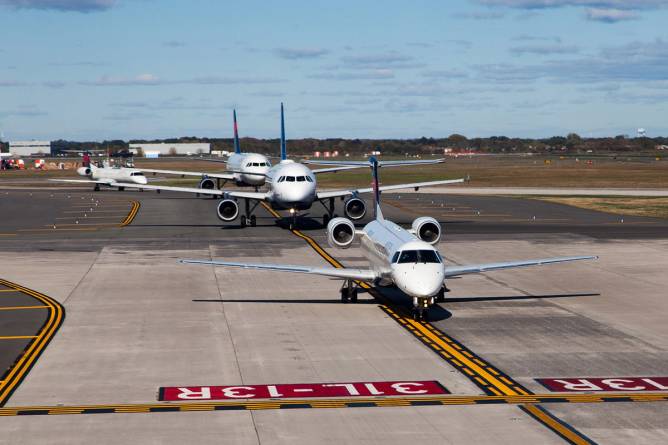
EARNINGS Airlines kicked off this year bullish, predicting heightened demand, bustling airports, and rising profits. But just like the peppy customer service rep will tell you at the gate after your flight to Boston has been delayed three times, not everything goes as planned. If you’ve tuned in to any kind of news this year, you’ve seen the slew of high-profile crashes, aviation failures, and general chaos that’s marked the travel industry in 2025. That, along with a broader consumer slowdown, is spurring vacationers to swap the Bahamas for a blow-up backyard pool this summer. Just take American Airlines, which despite beating top and bottom line expectations for Q2, projected a third-quarter loss and lowered its full-year guidance late last week. CEO Robert Isom told CNBC that the culprit was cost-conscious vacationers staying home, along with a dip in corporate travel spending and operational challenges. But American Airlines isn’t the only major carrier feeling pessimistic: United, Delta, and Southwest all offered full-year 2025 guidance that was lower than their original projections in January. Southwest had an especially brutal Q2: It not only underperformed both profit and revenue expectations, it had to tell investors that the $1.8 billion in earnings before taxes it had expected to rake in this year had been cut all the way down to between $600 million and $800 million. To get back on track, Southwest is—for the first time ever—going to start selling tickets with assigned seats, and is getting rid of former policies like two free checked bags for all customers. Sunnier skies ahead? But there were some bright spots in airlines earnings. For instance, the wealthiest customers are still splashing out on summer travel, especially abroad. The US’s passenger revenue per available seat mile declined 6% domestically in Q2, while it surged 3% internationally, according to CNBC. That’s one reason why airlines have been focusing on catering toward the upper echelon of travelers, rolling out more and more deluxe perks. Ready for takeoff: While the first half of 2025 has been tough, airlines are assuring investors that they’re seeing demand for travel slowly but surely tick up. Delta, for example, not only beat top and bottom line expectations last quarter but also forecast a stronger Q3 than analysts expected. That was a pretty big comeback from April, when the airline pulled its full year forecast altogether. Delta also mentioned that it plans to use AI to set ticket prices, a tactic already drawing scrutiny from members of Congress who’ve dubbed the move “surveillance pricing.” First they take away our free checked bags, and now this?—LB | | |
|
|
Together With Crypto 101 Pro tips galore. Come with questions and leave with insights at the Crypto Hedge Fund Summit. This free, two-day online event brings together some of the world’s best traders to discuss what’s working in the market right now, how to trade like a hedge fund (no matter your experience), and more. Save your spot. |
|
NEWS - The US housing market just posted its worst spring selling season since 2012
- A judge ruled that Federal Open Market Committee meetings do not need to be public
- Warner Bros. Discovery will become Warner Bros. and Discovery Global
- Here we go again: Boeing may be staring down yet another strike
- PayPal will now allow merchants to accept payment in the form of over 100 cryptocurrencies
- The next hot IPO on deck is web designer Figma, and it’s now aiming for an $18.8 billion valuation
|
|
|
CALENDAR Today was the calm before the data storm, but the first raindrops hit tomorrow. We’ve got the S&P Case-Shiller home price index to tell us just how bad the housing market really is, a look at consumer confidence to see if Americans are still optimistic about the economy, and the JOLTS report to kick off a week of labor market news. As for earnings, we’ll hear from PayPal, Visa, Starbucks, Procter & Gamble, United Health, Spotify, SoFi Technologies, Boeing, Merck, Royal Caribbean Cruiselines, JetBlue Airways, AstraZeneca, Corning, Stanley Black & Decker, Marathon Digital, Electronic Arts, Mondelez International, EcoLab, CBRE, and The Cheesecake Factory. But first thing in the morning we’ve got a major bellwether that can tell us a lot about the state of the US economy in general, and American consumers in particular.  Before the open Before the open
- UPS has undergone a serious transformation this year, and the 50% reduction in Amazon shipment volume has taken a toll on the company’s shares. Investors are hoping to hear that a turnaround is underway, though the worry is that the unforeseen costs of tariffs will hobble the company’s plans. Still, UPS’ business model remains solid, its balance sheet is clean, and its dividend yield keeps shareholders happy—plus, analysts are optimistic that advances in automation will bolster margins this quarter. Consensus: $1.56 EPS, $20.85 billion in revenue.
|
|
|
RECS  More great real estate news: Here are the 10 most impossibly unaffordable housing markets in the world, and half of them are in the US. More great real estate news: Here are the 10 most impossibly unaffordable housing markets in the world, and half of them are in the US.
 7 stocks with the biggest insider sales last week, including Goldman Sachs and QuantumScape. 7 stocks with the biggest insider sales last week, including Goldman Sachs and QuantumScape.
 SpaceX’s Starship keeps blowing up. Is Elon Musk’s space company doomed? SpaceX’s Starship keeps blowing up. Is Elon Musk’s space company doomed?
 Forget earnings reports—financial astrology is the hot new way to find your next investment. Forget earnings reports—financial astrology is the hot new way to find your next investment.
 The LA Times may be going public, but as you can see in this chart, every single print newspaper lost readers last year. The LA Times may be going public, but as you can see in this chart, every single print newspaper lost readers last year.
 Get smarter about stocks: The New Money’s free app has daily exclusive content on the world’s most exciting stocks and investing trends. Check it out.* Get smarter about stocks: The New Money’s free app has daily exclusive content on the world’s most exciting stocks and investing trends. Check it out.*
*A message from our sponsor. |
|
|
|
ADVERTISE // CAREERS // SHOP // FAQ
Update your email preferences or unsubscribe .
View our privacy policy .
Copyright © 2025 Morning Brew Inc. All rights reserved.
22 W 19th St, 4th Floor, New York, NY 10011 |
|