Adobe buys in
To:Brew Readers
Brew Markets // Morning Brew // Update
Plus, Blue Owl made everyone mad.

Good afternoon. Have you ever heard of a gal named Elisabeth Lederer?

She’s the subject of a portrait by Gustav Klimt that was expected to sell at auction for about $150 million. Instead, it only took 19 minutes of bidding for the price to soar to $236.4 million—making it the most expensive artwork ever auctioned off by Sotheby’s.

Which is great and all, but our focus was on the solid gold toilet auctioned off just a few minutes later for a cool $12.1 million.

The art market has been in a downturn lately, but when you’ve got a portrait from one of the founding fathers of the Art Nouveau style sitting right next to a fully functioning potty, you just know things are turning around.

Lucy Brewster, Sissy Yan, Judy Dutton & Mark Reeth

MARKETS

Nasdaq

22,564.23

S&P

6,642.19

Dow

46,138.77

10-Year

4.133%

Bitcoin

$89,547.77

Oil

$59.31

Data is provided by

*Stock data as of market close, cryptocurrency data as of 4:00pm ET. Here's what these numbers mean.

  • Stocks: Indexes clawed their way out of the red throughout the afternoon as anticipation built heading into Nvidia’s earnings report this evening.
  • The Fed: Minutes from the last FOMC meeting in October indicate that while central bankers mostly support more interest rate cuts, they may keep rates unchanged for the rest of the year.
  • Crypto: Bitcoin plunged below $90,000, continuing its dramatic slide as investors become more risk-averse.
 

M&A

An Adobe convention booth

SOPA Images / Getty Images

If you can’t beat ‘em—buy ‘em.

Today, Adobe jumped on the AI bandwagon and announced it is acquiring AI search engine optimization software platform Semrush for $1.9 billion.

Shares of Semrush popped 73.96%, while Adobe sank 1.96%.

Adobe’s got artificial intelligence FOMO. The company, which is known for its consumer-facing products like Adobe Photoshop and Adobe Illustrator, has been trying to evolve into an AI-forward design studio to better compete in the brave new world of machine learning.

But while Adobe has rolled out an array of AI tools on its platforms, investors haven’t liked the picture Adobe has been designing. Shares of Adobe are down 28.46% year-to-date, and analysts have begun doubting its ability to keep up with competitors. By buying its own SEO platform, Adobe can take a shortcut to becoming an AI dynamo.

What about the other guy?

Semrush is all about SEO, which once meant enticing Google into pushing a customer’s website higher up on search result webpages. But in an AI-driven world, Semrush has focused on improving search visibility on platforms like OpenAI, which have seen their share of the internet search market climb lately.

That hasn’t translated to huge success for Semrush. Despite today’s impressive rally, the stock remains down 1% in 2025.

Adobe hopes that Semrush can provide it with a one-two punch for companies trying to reach online customers through both traditional search engines and AI platforms.

“Brand visibility is being reshaped by generative AI, and brands that don’t embrace this new opportunity risk losing relevance and revenue,” explained Anil Chakravarthy, president of Adobe’s Digital Experience Business, in a statement.—LB

Ann's POV

I argued on Bloomberg TV recently that Adobe needs to make big, bold acquisition moves if it wants to get its stock moving again, but I found today’s announcement that it's buying Semrush anticlimactic. With only around $450 million of annualized revenue compared to Adobe’s more than $20 billion, this doesn’t move the needle for a software giant in an existential crisis. Adobe has very low net debt and the cash flow profile to go do more than tweak around the edges with its acquisition strategy. Listen to today’s episode of the Brew Markets podcast to learn where I think Adobe should be hunting for acquisition targets, and why the time to move is now.—AB

Presented By Nasdaq

STOCKS

The biggest winners and losers on the stock market today

🟢 What’s up

  • Alphabet rose 2.82% as investors cheered Google’s new Gemini 3 AI model, which delivers more accurate answers to complex questions and requires far less prompting for context.
  • Constellation Energy climbed 5.34% after the Department of Energy approved a $1 billion federal loan to help reopen the Three Mile Island Unit 1 nuclear plant.
  • Lowe’s gained 4.03% on a Q3 beat across earnings and revenue, standing in contrast to Home Depot’s disappointing results.
  • Dycom advanced 10.01% following a Q3 beat and the announcement of a $2 billion acquisition of Power Solutions to expand into data-center construction.
  • MP Materials soared 8.57% after signing a binding agreement with the Pentagon and Saudi miner Maaden to build a rare-earth refinery in Saudi Arabia.

What’s down

STOCK OF THE DAY

A Target storefront

Sundry Photography / Getty Images

It may be a very unmerry holiday season for Target shareholders.

This once-chic chain posted a 2.7% year over year decline in comparable store sales in Q3, the third-straight quarterly decline. Management warned that the usual holiday rush might be a bust, too, noting that cash-strapped shoppers made “trade-offs” over Halloween—buying more candy rather than decor—and hinted that Christmas may suffer the same fate.

This bleak, bare-boughed forecast sent shares tumbling 2.77% today—just the latest plunge in a spiral that’s already wiped out a third of the stock’s value this year.

What’s the problem? Some say Tar-zhay just never recovered from the pandemic, suffering through four years of stagnant sales as frugal consumers flocked toward better bargains like those found at T.J. Maxx and HomeGoods (their parent company reported strong earnings and an optimistic outlook today).

A boycott backlash also hit Target after it rolled back its DEI policies earlier this year. In October, the store axed 1,800 corporate jobs, its largest layoff in a decade. Even the CEO of 11 years got the boot and will be replaced in February by former COO Michael Fiddelke, who admitted to analysts, “If you’re frustrated with our recent performance, we are too.”

Target’s makeover plan: The struggling retailer will pour an extra $1 billion into spicing up its aisles with trendier merchandise and stepping up its tech via a partnership with OpenAI that would let ChatGPT users shop Target’s sparkly new offerings.—JD

PRIVATE CREDIT

A hand pushing money into a computer

Morning Brew Design

Private credit is supposed to be boring—but the industry’s new AI kingmaker just delivered some drama.

Alternative asset manager Blue Owl scrapped plans to fold one of its private funds into its publicly traded fund, Blue Owl Capital Corp (OBDC). The idea was to unlock long-term value by streamlining operations, cutting costs, and letting the combined vehicle benefit from OBDC’s lower funding costs and higher leverage.

But the private fund investors were being asked to exchange their shares at the net asset value of OBDC, which trades at about a 20% discount to its NAV—meaning private fund investors would immediately be hit with 20% paper losses, and they couldn't redeem their capital until the merger closed.

Investors understandably balked. The backlash dragged Blue Owl to 2023-level lows on Monday, and today the company ultimately decided the deal’s benefits weren’t worth the volatility (or negative headlines). Shares remain down 40% year to date.

AI anxiety

We wrote last week that Morgan Stanley estimated that $800 billion—nearly a third of the $3 trillion big tech companies plan to spend on AI over the next three years—will be funded by private credit, and Blue Owl is at the center of that pipeline.

The company just lined up a $14 billion package for an Oracle-OpenAI data-center project in Texas, raised another $30 billion for a Meta Platforms facility in Louisiana, and is even financing the purchase of Nvidia chips that will be leased to Elon Musk’s xAI.

These deals are marketed as low-risk: Lenders say the tenants sign long-term, ironclad leases that guarantee repayment. In fact, Microsoft is rated higher than the US government and is expected to double its data-center capacity within two years. On paper, the system should be bulletproof.

However, sentiment about both private credit investments and the AI trade as a whole has spooked the market. Investors have been pulling their money out of Blue Owl en masse: The Financial Times reported that they’ve withdrawn $150 million from its private fund through the first nine months of the year, 20% more than during the same period in 2024.

Today’s episode underscores the problem: If the underlying assets are so safe, why does Blue Owl need to trap investors and force them into 20% paper losses? If the safety of private-credit AI deals is partly propped up by limiting investor rights and managing liquidity behind the scenes, it might not be very safe at all.

Wall Street still argues that private credit deserves a central place in portfolios, offering diversification and a “healthy premium” over public debt. But critics say the boom is masking real risk: Jeffrey Gundlach warns that weak lending has migrated into private markets, where inaccurate pricing and hidden volatility are easier to bury.—SY

Together With Nasdaq

NEWS

Around the market

  • Buy the dip: Here’s why JPMorgan says this week’s stock market slide is a great opportunity.
  • Larry Summers resigned from the board of OpenAI after revelations about the famed economist’s email exchanges with sex offender Jeffrey Epstein.
  • Walmart is in talks to acquire R&A Data, an Israeli tech startup that monitors for scams.
  • The US trade deficit narrowed roughly 24% in August from the month prior as global tariff rates set in.
  • Elon Musk’s xAI is trying to raise $15 billion, pushing its valuation up to $230 billion.
  • Defaulted Venezuelan bonds are rallying as the US puts pressure on the nation for a regime change.
  • The BLS announced that the full October jobs report will not be released, and the agency will instead include what data it has in the November jobs report.

CALENDAR

What is happening in the world of finance tomorrow

Better late than never: The long-delayed September jobs report arrives tomorrow, and it’s dropping at a pivotal moment for the market. Fears that the Fed may not cut rates in December have risen dramatically lately, and stocks have sunk as investors continue to worry that monetary policy isn’t going to ease just yet.

Earnings continue to roll in, with a focus on retail thanks to reports from Walmart, Gap, Ross Stores, and Bath & Body Works. We’ll also hear from Intuit, Copart, NetEase, Post, and more.

RECS

Reading material

Apple just unveiled its list of the most popular podcasts of 2025. Did you listen to any of the winners this year?

President Trump wants to give Americans $2,000 checks. Turns out, that’s the magical number that gives people a cushion of financial security.

💲 Trying to find high-quality stocks for cheap? Take advantage of tax-loss harvesting season to snag some diamonds in the rough.

The economy has changed a lot since the 1990s—and even more so since the 1790s. Here’s a fascinating look at the evolution of job listings over the last 200-plus years.

Gold has crushed it this year, thanks in part to a central bank buying spree. Here’s a map of the countries that have accumulated the most gold over the last five years.

Get into innovation: The Nasdaq-100 Index® (NDX®) can grant you exposure to leading businesses that drive the economy across a broad swath of industries. Invest in the NDX® using NDX® index options today.*

*A message from our sponsor.

SHARE THE BREW

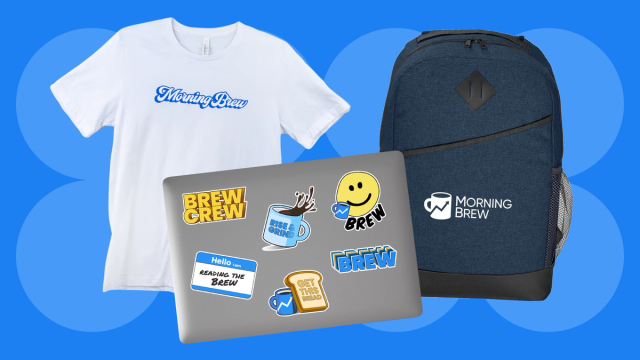
Share Brew Markets with your friends, acquire free Brew swag, and then acquire more friends as a result of your fresh Brew swag.

We’re saying we’ll give you free stuff and more friends if you share a link. One link.

Your referral count: 5

Click to Share

Or copy & paste your referral link to others:
morningbrew.com/brew-markets/r/?kid=9ec4d467

   
ADVERTISE // CAREERS // SHOP // FAQ

Update your email preferences or unsubscribe here.
View our privacy policy here.

Copyright © 2025 Morning Brew Inc. All rights reserved.
22 W 19th St, 4th Floor, New York, NY 10011

Making sense of market moves

Stay up to date on the latest market news with daily analysis of the investing landscape, served up Brew-style.

By subscribing, you accept our Terms & Privacy Policy.

A mobile phone scrolling a newsletter issue of Brew Markets